

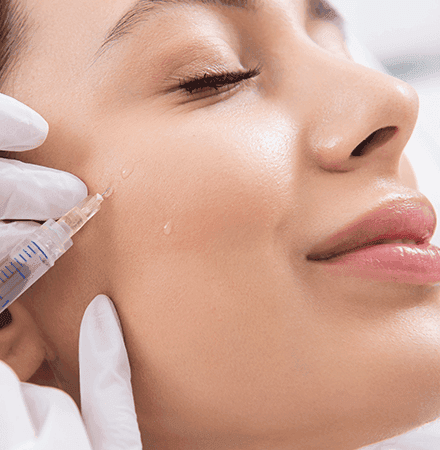
You see PDRN slapped on serums, masks, injectables, even scalp treatments. Brands hint that you should start early. Very early. Some clinics even suggest people in their early 20s need it as “prevention”. You feel that small alarm bell in your head for good reason.
Here is the blunt truth. PDRN is a bio stimulant drug class, not a cute plant extract. You need real age guidelines, not a TikTok trend.
PDRN can help repair skin, support collagen, and calm inflammation. The science is real, you can see careful reviews in sources like this clinical overview of PDRN in skin aging. The problem is how loosely it is sold and used. You are not wrong to feel uneasy.
You are going to see where PDRN actually fits by age, where it helps, where it is pointless, and where it crosses into “please do not do this”. You also get clear lines between topical PDRN skincare and injectable PDRN, because those two sit in very different safety zones.
Quick primer: what PDRN actually does in skin
You do not need a full biochemistry class. You do need the basics.
PDRN stands for polydeoxyribonucleotide. It is a chain of DNA fragments, usually from salmon sperm or similar sources. That sounds wild at first pass. Then you see the data and it makes more sense.
A few key points keep showing up in clinical papers and reviews.
- PDRN supports tissue repair and collagen growth in damaged or aged skin
- It has anti inflammatory effects, so it can calm redness and stress
- It seems to help microcirculation and healing after lasers, peels, and surgery
- It is usually used as an injectable drug, not a basic cosmetic
You can read a good plain language overview in this PDRN skin guide for patients. For deeper science, there is a review on PDRN as a promising anti aging agent in skin here.
If you want more background before you look at age stages, you can walk through the science based side of it in the complete guide to PDRN skincare and treatment.
Why age guidelines for PDRN even matter
You might think, if PDRN supports repair, younger skin just gets extra help. Not quite.
Younger skin already has fast cell turnover and strong collagen. Adding a bio stimulant drug on top does not usually add value. It can add cost, risk of injection side effects, and a strange mental shift where you feel broken at 18. That last part is not minor.
On the other end, mature skin often has slower healing and chronic inflammation. Here PDRN can pull real weight, especially in damaged or photo aged skin. That is where most of the better clinical work sits.
You also have the legal side. PDRN injectables sit in a medical gray zone in many countries. The global overview of PDRN regulatory status shows how uneven the rules are. Age just adds one more layer to sort out.
So you need to look at three things together for each life stage. Skin biology, actual concern, and the legal and safety context where you live.
Under 18: almost always a no for PDRN
If you are a parent, this part is for you. If you are under 18 and reading this, it is for you too.
Injectable PDRN in minors for pure beauty reasons is a bad idea. Full stop.
Your skin is still maturing. Collagen is high. Cell repair is fast. You do not need a DNA fragment drug to “prevent aging” at 15. What you need is sunscreen, barrier care, and stable habits.
Where is the rare gray area. In theory, a dermatologist could use PDRN for severe scars, burns, or wounds that are not healing well. That would be a medical call, with full consent, and usually inside a hospital or formal clinic setting.
Topical PDRN products are a bit different. These sit closer to cosmetic creams. Data on real penetration is still limited, you can read a careful review of PDRN absorption and topical bioavailability. For teens, even that is usually not needed.
If you are under 18 and someone is pushing PDRN injections for “glass skin”, you walk away. That clinic is telling you more about their ethics than your skin.
Age 18 to mid 20s: focus on barrier, not bio stimulants
Here is where the marketing gets loud. You hear “start early, never age”. You see young adults posting PDRN drips and skin booster sessions like weekly coffee.
For most people from 18 to around 25, PDRN injectables for anti aging make little sense. Your collagen is fine. Your elastin is fine. The best thing you can do is avoid damage that forces your skin to play defense all day.
If you want an actual plan at this age, it can look like this.
- You lock in daily broad spectrum sunscreen and simple barrier care
- You add a gentle retinoid or chemical exfoliant if you have acne
- You support your skin with sleep, food, and stress management
- You keep medical grade treatments for real problems, not fear of pores
Where can PDRN fit. In narrow cases, such as acne scars that are not improving, or stubborn marks after procedures. Here, a dermatologist may add PDRN to scar protocols, along with microneedling or laser.
You can read how PDRN is used in scar and acne work in this overview of PDRN for scar revision and acne. That is medical territory, not spa add ons.
For topical PDRN in your early 20s, you can treat it as a nice to have. Not a core need. If your budget is tight, spend on sunscreen and a good retinoid instead.
Late 20s to late 30s: early fine lines and real trade offs
This is the first age group where PDRN starts to make sense for more people, but it still should not be the default.
By your late 20s and into your 30s, collagen starts to drop. Sun damage, pregnancy, stress, and poor sleep all show up in fine lines and dull tone. You might start to look “tired” even when you are not.
Here you have actual choices.
- Topical PDRN as part of an active routine with sunscreen and retinoids
- Injectable PDRN as a skin booster around eyes, neck, or cheeks
- Combination with lasers or microneedling for early photo aging
A lot of clinics in Asia use polynucleotide injectables as skin boosters in this group, which you can see in a survey of cosmetic PDRN use in Korean dermatology. The pattern is clear. Doctors tend to pair it with other treatments, not use it alone.
If you want to judge if injectable PDRN is worth it at this age, you can look at three questions.
- Do you already use sunscreen and a vitamin A product well
- Do you have real signs of photo aging, not just normal expression lines
- Can you afford a full session series, not just one random shot
If the answer is no to those, your money is better used on simpler tools first. You can get very strong gains in tone and glow by pairing PDRN with other actives, like the PDRN and niacinamide barrier repair combo.
For early under eye lines and fine crepe, PDRN injectables can be a good fit, but you still need a skilled injector. It is a bio stimulant, not a filler. Technique matters.
40s and 50s: where PDRN earns its place
Once you cross into your 40s, things shift. Collagen loss speeds up. Hormone changes, especially in women around perimenopause, hit skin firmness hard. Photo damage from your teens and 20s also shows up as texture, dullness, and uneven tone.
This is the age band where PDRN often performs best as part of a structured plan.
You can use PDRN in three main ways here.
- As a series of skin booster style injectables for face, neck, or hands
- As a repair aid after lasers, radiofrequency, or surgery
- As support for chronic redness or sensitive skin that needs calming
There is a growing set of clinical reports that show better texture and elasticity in mature skin with PDRN, especially in photo aged areas. You can see a broad review of outcomes in this paper on PDRN from salmon for aesthetic use.
You do not need to guess on pairing. There is solid guidance for combined protocols.
For example, you can pair PDRN with light lasers or microneedling to push collagen more, as laid out in this guide to combining PDRN with lasers and microneedling. For hands that give away age faster than your face, you can look at PDRN for hand rejuvenation and protocol ideas.
Topical PDRN can also help as a support step, especially if your skin is thin or reactive. Here the anti inflammatory side matters more than the mild bio stimulant effect.
If you are in this age group, the big mistake is not overdoing PDRN. It is chasing it without a plan. You get the best use when your dermatologist builds a full course with clear goals, not a random mix of shots and serums.
60s and beyond: focus on function, healing, and comfort
In your 60s and later, your priorities often shift. Yes, you may still want smoother skin, but healing speed and comfort usually matter more.
Here PDRN can have a strong role, not only for looks but for function.
- Supporting wound healing after surgery or skin cancer removal
- Helping repair fragile, thin skin on hands, neck, and lower legs
- Calming chronic redness or irritation that blocks other treatments
Many of the early medical uses of PDRN were not cosmetic at all. They were for ulcers, slow healing wounds, and graft support. That history is clear in clinical reviews such as the regenerative medicine focused PDRN overview. Cosmetic work is almost a side effect of those early trials.
If you are in this age band, it makes sense to talk with your dermatologist about PDRN in a broader context, not just wrinkles. Ask how it fits with your medical history, medications, and any vascular issues.
Topical PDRN creams or serums can be very useful here, since they are gentle and easy to add. The focus is on barrier support and calming, not instant lifting.
Matching delivery type to age and skin goals
Age is only half of the question. The other half is delivery. PDRN behaves very differently as a topical ingredient than as an injectable drug.
You can use a simple grid in your head.
- Under 18: no injectables, topical only if guided by a doctor
- 18 to mid 20s: topical optional, injectables only for scars or real issues
- Late 20s to 30s: topical helpful, injectables for early aging or targeted repair
- 40s to 50s: both topical and injectables often useful and efficient
- 60s plus: strong case for both, with focus on healing and comfort
If you want a more technical view of how different delivery routes behave, the overview on topical versus injectable PDRN breaks down what reaches where in the skin.
For injectables, technique and product quality decide most of your outcome. Poor placement can cause swelling, lumps, or no result at all. That is why so many training bodies now offer formal programs, as you can see in the guide to PDRN training and certification for practitioners.
How to talk to your dermatologist about age and PDRN
If you feel unsure, that is normal. You are sorting through clinic sales, brand hype, and medical jargon.
A good way to cut through it is to ask direct, age focused questions.
- How does my age and skin type change the expected result
- What is the main goal, and can I reach that with simpler tools
- What is the plan if I do not respond to PDRN as hoped
- How many sessions do you expect, and over what time
- Are you using PDRN alone or with lasers, microneedling, or fillers
You can prepare by reading a clear overview of PDRN in aesthetic medicine so you walk in with the same terms your doctor uses.
If a clinic cannot answer these questions without vague promises, you have your sign.
Where PDRN fits in a full age aware routine
You do not use PDRN in a vacuum. It sits inside a full plan that changes as you age.
By now you can see a pattern.
- In your teens and early 20s, PDRN is almost never needed
- In your late 20s and 30s, it is a nice extra for specific concerns
- In your 40s and beyond, it becomes a strong tool among other treatments
You still have to respect limits. PDRN is not a free pass to skip sunscreen or to take reckless sun exposure. In fact, it works best when you do the boring habits well.
If you do go ahead with injectable PDRN at any age, your aftercare will shape your result. You can follow a structured plan from this guide on PDRN aftercare and practical steps.
Your goal is not to chase every new skin booster by default. Your goal is to know where PDRN fits for your age, your skin, and your real life, then use it with the same care you would give any other medical treatment.
You deserve more than trend based advice. You deserve a plan that treats your age as a real factor, not a marketing angle.