

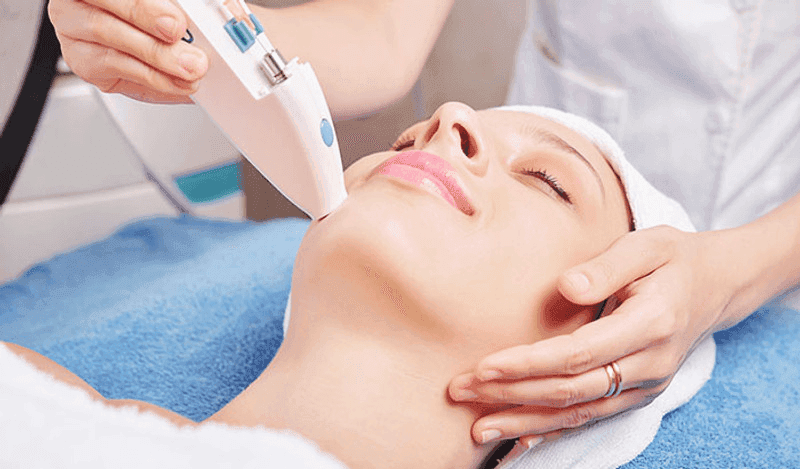
At this point, classic microneedling alone feels a bit dated. Clinics that add PDRN with Dermapen often see skin heal faster, look calmer, and hold results longer.
Microneedling by itself already boosts collagen. Small needles create tiny channels, the skin rushes to repair them, and texture improves. When clinics add polydeoxyribonucleotide, or PDRN, those channels stop being just damage. They turn into delivery tracks for a repair signal that tells skin cells to work smarter, not just harder.
This combo is not magic. It still needs good products, solid skill, and the right patient choice. But it lines up with what current science says about controlled injury and guided regeneration. It is one of the more logical ways to upgrade a standard Dermapen session without jumping to fillers or energy devices.
What PDRN Actually Does In The Skin
PDRN is made from tiny DNA fragments, often from salmon sperm. That sounds odd, but the key point is how those fragments act in human tissue.
Researchers see PDRN as a bio stimulator. It does not just sit in the skin like filler. It sends signals through A2A adenosine receptors that tell cells to calm inflammation and ramp up repair. Studies on wound care show stronger tissue growth and better blood flow where PDRN is used.
For a deeper dive on the science, the article on understanding PDRN efficacy and the data behind the claims gives more detail on lab and clinical work.
In practice, this means three useful things during microneedling.
First, PDRN can speed healing. Skin that would stay red for three days may look calmer after one or two. That shorter social downtime matters to busy professionals and anyone on camera.
Second, PDRN can improve tissue quality, not just surface texture. There is better collagen and elastin support, so results often feel less like a quick glow and more like real structural change.
Third, PDRN has a clear anti inflammatory profile. That makes it interesting for sensitive skin and for people who react badly to standard peels or strong acids.
Clinics that already use PDRN injections or mesotherapy often treat microneedling as the lighter cousin. The content on PDRN in aesthetic medicine as a practitioner overview lays out how it fits with other tools.
Why Dermapen Is A Good Match For PDRN
Not all microneedling devices behave the same. Dermapen style pens give very controlled, vertical channels. That control matters when PDRN is in play.
Dermapen devices let clinicians adjust depth by area. Cheeks may sit at one depth, nose and forehead at a shallower one, scars at a bit deeper. With PDRN in the mix, that control means the serum goes right where it is needed, not just on the surface.
The channels close fast. For many people, that means there is a short window of enhanced absorption. During that window, a PDRN serum can get closer to the dermis, where collagen, elastin, and blood vessels sit.
The work on PDRN absorption and topical bioavailability explains why simple rubbing on the skin is often not enough. Microneedling gives PDRN a better chance to reach its target.
There is also a workflow benefit. Clinics that already use Dermapen for acne scars or fine lines do not need to change the whole procedure. They can upgrade the active serum and tweak settings instead of adding a new device line.
Where This Combo Shines Most
Some skin issues respond especially well when controlled injury meets guided repair. PDRN with Dermapen seems strongest in a few clear groups.
Acne scars and old texture damage
For atrophic acne scars, studies on microneedling with growth factors or PRP show better results than dry needling alone. A meta analysis on microneedling and PRP for acne scars found that the combo group improved more than microneedling only groups, based on scar scores and patient ratings, in several small trials, as noted in this review of combined microneedling and PRP.
PDRN is not PRP, but it plays in the same broad field of regenerative signals. Clinics report that acne scar patients see more even texture and less post treatment redness when PDRN is part of the protocol.
Photoaging, dull tone, and fine lines
Chronic sun damage leads to thin, crinkled skin that heals poorly. PDRN supports repair in a way that matches this problem very well. The guide on PDRN and sun damage for reversing photoaging walks through how DNA repair and collagen support play a role.
With Dermapen, that support is paired with a classic collagen trigger. The skin gets a nudge to rebuild from both sides, injury and instruction.
Sensitive or reactive skin
Sensitive skin is often left out of advanced treatments. Standard microneedling serums may hold strong acids, high level retinoids, or fragrance that cause trouble.
PDRN serums tend to focus on calm repair. That makes them a good fit for people who react to most active blends, as long as the base formula avoids common irritants.
The content on PDRN for sensitive skin and its anti inflammatory benefits explains why this ingredient is less likely to trigger flares.
How Clinics Usually Structure A PDRN Dermapen Session
There is no single global protocol, but most serious clinics follow a pattern. Small details change by device and brand, but the logic stays the same.
- Assessment and prep
- Skin cleanse and barrier check
- Primary Dermapen pass with PDRN serum
- Optional focused passes on scars or lines
- Post care with barrier support
During assessment, clinicians screen for active acne, infection, strong keloid history, and immune issues. They check drug use, such as blood thinners or isotretinoin, and current skincare.
For the main pass, many clinics work in the 0.5 to 1.0 millimeter depth range on the face. Scar work may go a bit deeper in very thick areas, but always with clear consent and clear risk talk.
A helpful guide on how to use PDRN serum in microneedling shows that many brands suggest a first layer before needling and a second light layer right after.
Post care often sticks to bland barrier creams and mineral sunscreen for at least three days. Strong acids, scrubs, and retinoids are paused.
For people who want more detail on recovery behavior, the page on PDRN aftercare and tips for optimal results lays out what most clinics suggest.
How Results Compare With Standard Microneedling
There is less formal research on PDRN plus microneedling than on PRP plus microneedling. But the pattern from other combo studies is clear. When a sound regenerative active is added, outcomes often improve.
For example, a study in a cardiology journal compared microneedling alone with microneedling plus PRP for atrophic acne scars. The combo group had greater scar score improvement, based on a standard acne scar scale, as seen in this trial on microneedling versus microneedling with PRP for acne scars.
Another study on facial rejuvenation found that PRP with microneedling improved fine lines, texture, and pigment more than microneedling alone, in a group of adult patients, as noted in this work on PRP and microneedling for facial skin rejuvenation.
Again, PDRN is not the same as PRP. But it belongs in the same category of regenerative partners for microneedling.
Clinics that track before and after photos often notice three main shifts when PDRN is used.
- Redness fades sooner in the first week.
- Skin looks less inflamed and more even in tone.
- Long term changes in fine lines and texture hold up better between sessions.
There is a whole article on PDRN and microneedling results and how to manage expectations that warns against over promising. Results build over time and depend a lot on baseline skin quality and lifestyle.
PDRN With Dermapen Versus Other Combos
Clinics that work in regenerative care now juggle several options. PRP, exosomes, growth factor gels, and PDRN all fight for space in the same tray.
A review on regenerative skincare tools in aesthetic practice covers PRP, exosomes, PDRN, and growth factor gel in one place, and highlights that each tool has different strengths, as seen in this overview of regenerative skincare with PRP, exosomes, PDRN, and growth factor gel.
PDRN with Dermapen sits in a useful middle ground.
PRP demands blood draws, spin kits, and more time. Exosomes tend to be pricey and have more regulatory noise in some regions. Growth factor gels can work well but often focus on surface glow.
PDRN is usually less complex to set up than PRP. It has more direct DNA repair support than classic peptide blends. It fits neatly into existing Dermapen work without a total workflow shift.
For some patient groups, clinics still favor PRP or exosomes. For example, strong hair loss work or deep scar revision may still sit in the PRP lane. The guide on PDRN versus PRP as regenerative treatments breaks down where each option wins.
Safety, Limits, And Who Is Not A Good Candidate
PDRN has a solid safety profile in current literature, but it is not for everyone or every case.
People with a known fish allergy, especially to salmon, should be screened very carefully. Some PDRN products are made from salmon DNA, so that risk is not just theory.
Clinics also stay careful with pregnant or nursing patients, people with active cancer, and people on strong immune drugs. Those groups often sit out advanced procedures by default.
The article on PDRN regulatory status and global compliance reminds readers that legal status shifts by region. In some places, PDRN is treated more like a drug. In others, it sits in a gray cosmetic zone.
Microneedling itself has clear limits too. Active cystic acne, active herpes lesions, or open wounds are classic red flags. People with keloid history or very dark skin need careful needle depth and interval planning to lower pigment risk.
Clinics that want a broader view of patient choice can look at the guide on PDRN patient selection and ideal candidates. It covers health checks, age ranges, and common red flags.
How Clinics Can Integrate PDRN With Dermapen Smartly
For clinics that already offer microneedling, PDRN is not a simple plug and play add on. It works best inside a real protocol.
Here are practical steps that experienced aesthetic teams tend to follow.
- Start with a limited group of indications, such as acne scars and photoaging.
- Choose one or two PDRN lines and study their data and handling needs.
- Train staff on both microneedling technique and PDRN specific points.
- Build clear consent forms that name PDRN as part of the plan.
- Track photos, patient feedback, and any side effects with each cycle.
Clinics that want more structure can check the page on PDRN training courses and certification for practitioners. Formal training helps avoid the trial and error phase that annoys patients and staff.
Where This Combo Fits In A Bigger Treatment Plan
PDRN with Dermapen is not the top of the pyramid. It is one layer in a broader plan that can include topical care, energy devices, fillers, and even surgery.
For example, many clinics use Dermapen with PDRN in between stronger work. A patient might have a laser session for pigment, then a PDRN microneedling visit eight weeks later to support texture and recovery.
Some teams pair PDRN Dermapen sessions with light filler work in hollow areas, under clear safety rules. The guide on combining PDRN with fillers safely explains how spacing and injection planes help lower risk.
Used that way, PDRN microneedling becomes a maintenance and support tool. It keeps collagen activity alive between heavy lifts and gives the skin better baseline health.
The Bottom Line On PDRN With Dermapen
PDRN with Dermapen microneedling is not hype for its own sake. It lines up with current understanding of controlled injury and guided repair. It respects the fact that skin responds better to a smart signal than to damage alone.
Clinics that use it well tend to do three things. They pick their cases with care. They invest in staff skill. They treat PDRN as a core active, not as a random extra.
When those pieces are in place, this combo can move results from “nice glow for a week” to visible structural change over several months. That is where real value lives, for both patients and professionals who care about outcomes, not just trends.