
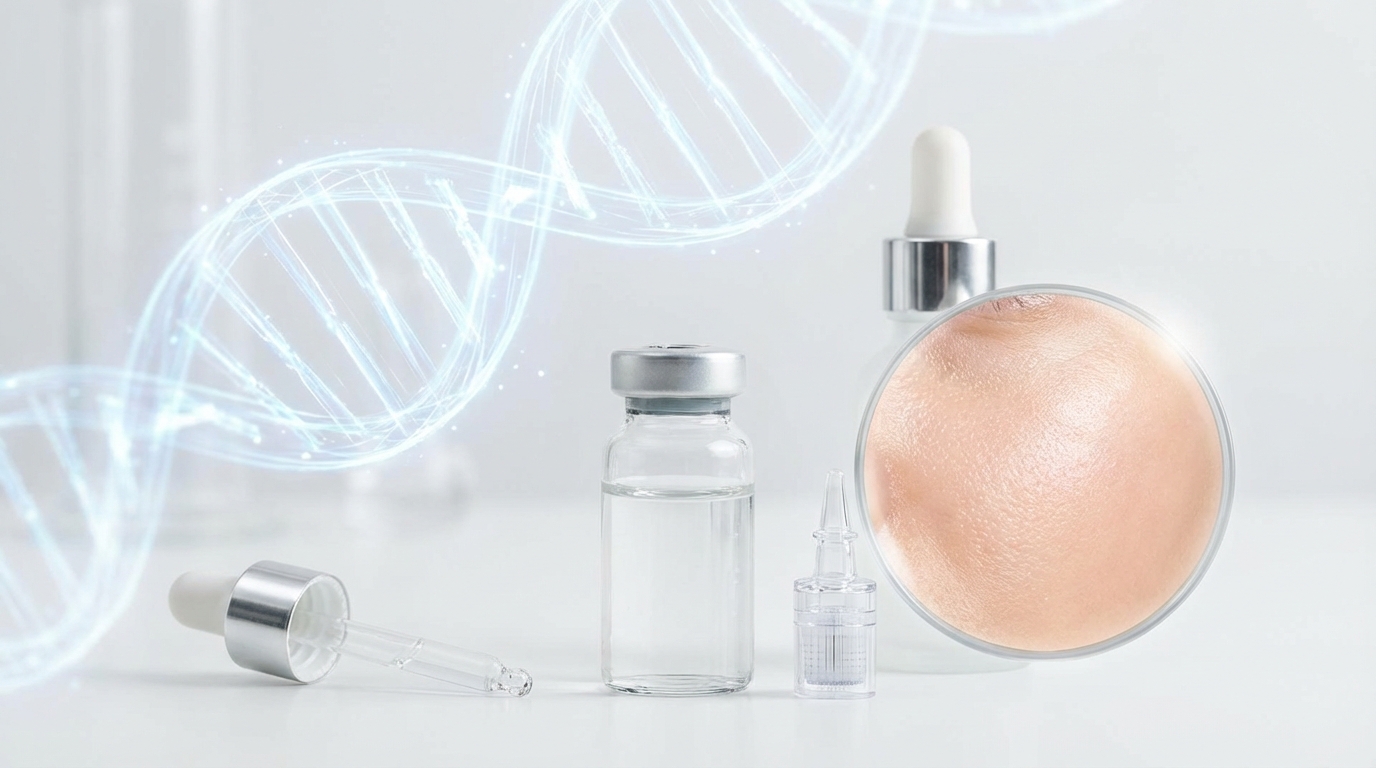
Fine lines multiply. Collagen drops. Traditional anti-aging treatments love to promise miracles, but the results are usually modest at best. And while a lot of cosmetic procedures focus on what you can see on the surface, a newer regenerative approach looks deeper, using an unexpected source: salmon DNA. Polydeoxyribonucleotide (PDRN) therapy marks a real shift, moving away from covering up signs of aging and toward rebuilding damaged tissue at the cellular level.
So, what is PDRN? It’s a purified extract of salmon DNA that’s surprisingly compatible with human cells. It helps kick-start repair processes that slow down, or stall, as we age. Unlike fillers that simply add volume, or lasers that create controlled injury so your skin heals, PDRN delivers nucleotides, the building blocks of DNA, right into aging skin. That can ramp up fibroblast activity, support angiogenesis, and wake up regenerative pathways that have gone quiet.
This guide cuts through the marketing and looks at the science behind PDRN therapy, how safe it is, and what results you can realistically expect. We’ll compare it directly to PRP and stem cell treatments, explain regional pricing differences, and set evidence-based expectations. If you understand what is PDRN and how it works, you’ll be in a much better position to decide whether this regenerative option is worth your time and money.
What is PDRN and How Does Salmon DNA Regenerate Human Skin
Polydeoxyribonucleotide (PDRN) is a chain of DNA fragments, usually 50 to 1,500 base pairs long, extracted and purified from salmon sperm cells. The process starts with enzymatic digestion of salmon DNA using DNase, which breaks long DNA strands into smaller, medically useful fragments. After that, the fragments go through strict purification steps, including filtration and sterilization, to remove proteins, fats, and other cellular leftovers. What remains is essentially purified nucleotide sequences.
That salmon DNA extract is rich in adenine and guanine nucleotides, the same basic building blocks found in human DNA. Once injected into the skin, these fragments don’t merge into your DNA. Instead, they act more like signaling molecules. They interact with adenosine receptors on cell surfaces and set off a chain reaction tied to tissue repair and regeneration.
The key mechanism revolves around activating adenosine A2A receptors. PDRN fragments break down into adenosine, which then binds to A2A receptors on fibroblasts, endothelial cells, and keratinocytes. That receptor activation increases cyclic adenosine monophosphate (cAMP), which turns on protein kinase A pathways linked to collagen production, angiogenesis, and cell growth.
So what is PDRN doing in damaged tissue, in plain terms? It helps restart repair processes that have slowed down by providing the signals cells need to get moving again. Research from OECD Statistics shows meaningful improvements in wound-healing rates when DNA-based therapies are used on compromised tissue.
The Science Behind Cross-Species DNA Compatibility
Salmon DNA can work in human tissue because nucleotides are basically universal across species. Adenine, guanine, cytosine, and thymine have the same structure whether they come from salmon or from humans. That shared “language” is why salmon-derived fragments can interact smoothly with human cells, and why PDRN’s cellular mechanism can work across different tissue types.
With the biology out of the way, the next thing people want to know is what the appointment is actually like, and what recovery looks like day to day.
PDRN Treatment Process: What to Expect During Your Regenerative Therapy Journey
The PDRN process starts with a full consultation. Your provider will look at your skin, go over your medical history, and talk through your goals. You’ll usually need to avoid blood-thinning medications for 48 hours beforehand and show up with clean, makeup-free skin. The practitioner will take photos of the areas being treated and walk you through what is PDRN and how it may help your specific concerns.
Treatment Session Breakdown and Duration
A typical PDRN session takes about 45 to 60 minutes. First, the provider cleans the area with an antiseptic. Then they apply a topical numbing cream for around 15 to 20 minutes to take the edge off. After that, using very fine needles, they inject small amounts of PDRN into the dermis, usually at a depth of about 2 to 4 millimeters. The injections are spaced evenly across the area, often about one centimeter apart, to cover the zone consistently.
Most patients describe it as small pinpricks rather than sharp pain. The injection portion itself usually runs 20 to 30 minutes, depending on how large the treatment area is. A full-face treatment might involve roughly 50 to 80 injection points, while the neck often needs around 30 to 50.
Right after treatment, you’ll probably have some redness and swelling, kind of like a moderate sunburn. That tends to peak within a couple of hours and then calm down over the next 24 to 48 hours. Tiny injection marks can stick around for 12 to 24 hours, especially if you bruise easily.
Recovery is pretty predictable. Day one is usually the most “puffy” day. From days two through seven, things settle gradually, though you might still feel a little tenderness. Most people go back to normal activities within 24 hours, but you should avoid intense workouts for about 48 hours.
You may notice early changes within two weeks. But the best results tend to show up around 4 to 6 weeks, once regeneration really ramps up. Most protocols call for three sessions spaced about 3 to 4 weeks apart. And if you want your results to last, aftercare matters, so review essential aftercare tips and follow them closely.
Once you know what the process looks like, it’s easier to decide how PDRN stacks up against other regenerative treatments people talk about all the time.
PDRN vs PRP vs Stem Cells: Complete Comparison for Anti-Aging Treatment Decisions
All three treatments aim to improve aging skin, but they get there in different ways. PDRN delivers nucleotide fragments that activate adenosine receptors, which can boost collagen and support angiogenesis. PRP uses platelets spun out from your own blood, and those platelets release growth factors that help drive repair. Stem cell therapy involves introducing mesenchymal cells that can influence healing and, in some settings, differentiate into different cell types.
Effectiveness varies more than most marketing makes it sound. PDRN tends to produce consistent results across many skin types, with clinical studies reporting about a 40 to 60% improvement in fine lines after three sessions. PRP can work well, but outcomes depend heavily on your platelet quality, your health, and how the PRP is prepared. Stem cell therapy can offer the biggest change, but it also comes with the highest risk profile and the most “it depends” variables.
Costs are also very different. PDRN often runs $400 to $600 per session, and most people need 3 to 4 sessions up front. PRP is usually $300 to $500 per session, with a similar number of starter sessions. Stem cell therapy can cost $2,000 to $5,000 per treatment, though it’s often done less frequently. According to OECD data, regenerative medicine costs have dropped about 15% per year as methods become more standardized.
Choosing the right option depends on who you are and what you’re trying to fix. PDRN is often a good fit for someone who wants predictable, moderate improvement with minimal downtime. If you’re wondering what is PDRN best for, think fine lines, texture issues, and overall skin quality. PRP tends to work best in younger, healthier patients who already heal well. Stem cell therapy is usually reserved for more advanced concerns, and for people who can handle longer recovery and a more complex risk-benefit tradeoff.
Some clinics combine treatments to get better results. And if that’s on the table, understanding how PDRN and growth factors work together can help your provider plan a protocol that makes sense instead of stacking treatments randomly.
Treatment Longevity and Maintenance Requirements
PDRN results often last about 12 to 18 months, with maintenance commonly done quarterly, depending on the patient and the protocol. PRP tends to fade sooner, usually in 6 to 12 months, so people often repeat it twice a year. Stem cell results can last longer, around 18 to 24 months, but many patients still need yearly touch-ups. What is PDRN’s big advantage here? The maintenance schedule is usually straightforward, and costs are easier to predict.
After you weigh benefits and trade-offs, the deciding factors are often safety and whether you’re actually a good candidate.
PDRN Safety Profile: Side Effects, Contraindications, and Patient Selection Criteria
Clinical research over more than 15 years points to a very strong safety record for PDRN. A 2019 multi-center study of 847 patients reported adverse events in only 3.2% of cases, and every one of those events was mild and went away within 72 hours. Korean dermatology research tracking 2,400 treatments reported zero systemic reactions and no permanent complications.
Some clear reasons mean someone shouldn’t get it. Absolute contraindications include active skin infections, autoimmune disorders that affect collagen production, and pregnancy. Patients with bleeding disorders also shouldn’t do PDRN because injections can trigger problematic bleeding. People with fish allergies need extra caution, although the purification process removes the proteins that usually cause allergic reactions.
Relative contraindications include active acne flare-ups, isotretinoin use within the past six months, and taking immunosuppressive medications. And honestly, if someone has unrealistic expectations or signs of body dysmorphia, they aren’t a good candidate even if their skin is technically suitable.
The most common side effects look like what you’d expect from small injections: temporary redness, swelling, and tenderness for 24 to 48 hours. Bruising happens in about 15% of patients, especially if they take supplements like fish oil or vitamin E. Risk reduction is pretty simple: stop blood-thinning substances 48 hours before, and use ice right after treatment.
Rare issues can include temporary hyperpigmentation, especially in deeper skin tones, and uneven swelling if you sleep face-down right after injections. But what is PDRN’s most serious potential complication? Granuloma formation. It’s reported in fewer than 0.1% of cases and is usually linked to poor technique or contaminated products.
Special Considerations for Sensitive Skin Types
If you have rosacea, eczema, or chronic dermatitis, you may need a modified approach. Some providers recommend patch testing 48 hours before treating the full area. These patients often do better with smaller injection volumes and longer gaps between sessions. Figuring out what is PDRN and whether it’s appropriate is especially important if your skin is reactive.
If you’re a good candidate, the next practical challenge is cost, and knowing when you’ll actually see changes.
PDRN Treatment Costs and Results Timeline: Regional Pricing and Realistic Expectations
Prices can swing a lot depending on where you are. In Seoul, where PDRN first took off, sessions often cost $200 to $400. In the U.S., many clinics charge $600 to $1,200 per session, and places like Beverly Hills or Manhattan can go as high as $1,500. Europe usually lands in the middle: London averages around $800 to $1,000, while some Eastern European clinics offer treatments for $300 to $500.
Those differences aren’t random. South Korea has a mature PDRN market and lots of providers offering it, which drives prices down. U.S. pricing often reflects higher insurance costs, stricter compliance burdens, and higher clinic overhead. EU pricing tends to sit between the two, shaped by regulatory requirements and local market demand.
Results also follow a fairly steady timeline, depending on what you’re treating. Fine lines often start improving at 4 to 6 weeks, with the most noticeable benefits around 12 weeks. Acne scars usually take longer: you might see early changes at about 8 weeks, with more meaningful improvement around 16 to 20 weeks. Texture and pore refinement often show up around 6 to 8 weeks. What is PDRN’s edge over a lot of alternatives? The improvements can keep building, and results often last 6 to 12 months after you finish the initial series.
More than location affects what you’ll pay. Provider credentials matter, board-certified dermatologists usually charge more than non-physician injectors. Clinic overhead changes pricing too, especially in luxury areas. Treatment depth can also shift the total, since deeper dermal approaches tend to cost more than very superficial injections. Many clinics offer packages that cut the per-session rate by about 15 to 20%.
To judge value, you also have to think about how long the results last. The upfront cost can feel steep. But if you’re comparing it to treatments that require frequent touch-ups, the math can work out in PDRN’s favor. And proper patient selection matters here too, since the best “deal” is the treatment that actually works for your skin.
Insurance Coverage and Financing Options
Insurance almost never covers PDRN when it’s done for cosmetic reasons. Some policies may cover medically necessary uses, like wound healing or diabetic ulcers, but aesthetic skin rejuvenation usually isn’t included. Some clinics partner with financing companies that offer payment plans, including 0% interest options for 6 to 12 months, which can make it easier to manage the upfront cost.
All of this leads back to the only question that really matters: is this worth it for you?
The Bottom Line
PDRN is a science-backed approach to skin regeneration, and it’s getting popular in aesthetic medicine for a reason. The research around wound healing, collagen stimulation, and anti-inflammatory effects suggests it has real therapeutic value, not just flashy marketing. When you understand what is PDRN and how it works, you can make a smarter call about whether it fits your skin goals.
But PDRN isn’t for everyone. Your skin type, your concerns, your medical history, and your expectations all play a role in whether you’ll do well with it. Technique matters too: injection depth, concentration, and the treatment plan can make a big difference in both safety and results. Don’t rely on internet research alone. Book a consult with a qualified dermatologist or plastic surgeon who can evaluate you properly and map out a plan that’s tailored to your skin and your risk tolerance.
If you still have practical questions, the FAQs below cover the most common decision points patients bring up.
Frequently Asked Questions
Is PDRN treatment safe for all skin types and ethnicities?
PDRN injections have a strong safety profile and are generally appropriate for many skin types and ethnicities when done by a trained clinician. In melanin-rich skin, providers may use more conservative injection techniques and tighter aftercare to lower the risk of post-inflammatory hyperpigmentation from needle irritation. A personalized assessment still helps a lot, especially if you’re prone to keloids or pigmentation shifts.
How much does PDRN treatment cost compared to other anti-aging procedures?
Pricing depends on region and clinic, but PDRN often runs about $200 to $600 per session in many Asian markets and roughly $400 to $1,200+ per session in the U.S. and parts of Europe. Compared with devices or fillers, the per-session cost can be lower. But the real value depends on how many sessions you need and how long your results last, since most protocols include an initial series.
How long do PDRN results last and how often do you need treatments?
Visible improvements often last around 6 to 12 months, depending on your skin condition, lifestyle, and the plan your provider uses. Many clinicians recommend 2 to 4 starter sessions spaced a few weeks apart, followed by maintenance every 6 to 12 months. Your provider may change the schedule for concerns like acne scarring, dryness, or sun damage.
What’s the difference between PDRN and PRP treatments for skin rejuvenation?
PDRN uses purified DNA fragments to support repair signaling and improve hydration, texture, and elasticity. PRP uses your own concentrated platelets to release growth factors that help stimulate collagen and healing. PRP can be a good fit if you want an autologous option, while PDRN can appeal to people who want a consistent formulation and a blood-free appointment.
Are there any side effects or risks with PDRN injections?
Common side effects are temporary and include redness, swelling, tenderness, small bruises, and mild itching where the injections go. Less common risks include infection, persistent nodules, allergic reactions, or vascular complications if it’s injected incorrectly. Get medical care quickly if you notice worsening pain, blanching, spreading redness, fever, or skin discoloration.
Key Takeaways
- PDRN uses purified salmon DNA fragments to stimulate natural skin regeneration
- Treatment involves multiple injection sessions with minimal downtime
- Results typically last 6-12 months with proper maintenance
- Cost varies significantly by region but offers competitive value vs alternatives
- Professional consultation essential for safety and optimal outcomes