
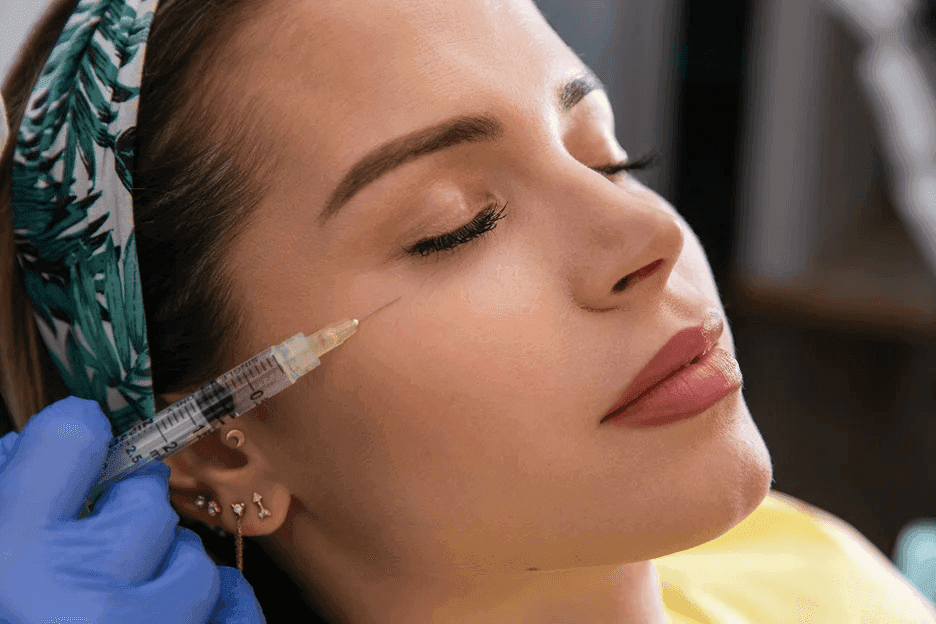
Is PDRN safe? In the studies that exist, yes — short-term. Reported reactions are overwhelmingly injection-site effects: redness, swelling, bruising, brief stinging. Serious adverse events are rare in the published literature. The honest caveat, and the reason this page exists: long-term human safety data in aesthetic use is thin, and follow-up windows in the trials are measured in months, not years.
That is a reassuring headline with a real asterisk. Most pages on this question give you the first half and quietly drop the second.
What is PDRN made from, and why does that matter for safety?
PDRN is a mixture of purified DNA fragments. The raw material is fish sperm — specifically the sperm cells of salmon trout (Oncorhynchus mykiss) or chum salmon (Oncorhynchus keta). A 2021 review in Marine Drugs surveyed 70 studies published between 2016 and 2020 and found 40 used O. mykiss, 29 used O. keta, and only 3 used sturgeon. So when you read “salmon DNA,” that is literal, not marketing.
The source tissue is chosen deliberately, and this is the crux of the safety argument. As Squadrito and colleagues put it in their 2017 Frontiers in Pharmacology review, “spermatozoa are the most appropriate cells to provide highly purified DNA without risk of impurity such as peptides, proteins and lipids.” The material is then extracted and purified at high temperature, which “allows to recover a >95% pure active substance with inactivated proteins and peptides.”
That sentence does the heavy lifting. Proteins are what immune systems react to. Strip them out and you remove most of the mechanism by which a foreign biological material would cause trouble. The same review concludes that “the lack of effects on the immune system is one of the most important determinants of the good safety profile.” Our complete guide to polydeoxyribonucleotide therapy covers what happens once it is in the skin.
What does the PDRN safety data actually show?
Three tiers of evidence, in descending order of strength.
Toxicology and long-running drug use. PDRN is not a new molecule. It was developed as a wound-healing drug, and in animal work at 8 mg/kg it “showed no toxic effect in brain, liver, lungs skeletal muscle and heart and did not cause mortality.” More usefully, Squadrito et al. report a post-marketing surveillance study running over five years and covering more than 300,000 dispensed prescriptions, which “confirmed the excellent safety profile.”
Read that carefully. That surveillance is for the medical product used in wound healing and ulcers — not for cosmetic skin boosters injected into faces. It is real and it is meaningful, because it says the molecule itself does not appear to hurt people at scale. It is not evidence about your under-eyes.
Aesthetic trials. Here the safety signal is consistent but the studies are small. A 2026 prospective observational study in the Journal of Cosmetic Dermatology followed 42 patients receiving polynucleotide injections for periorbital wrinkles and reported mild swelling and discomfort with a few instances of minor bruising at two days, and no delayed complications, nodules, persistent edema, or infections over six months. A separate 2026 real-life assessment of 66 patients found “no serious AEs occurred,” with swelling, erythema, pain, bruising, heat and itching all resolving spontaneously — and the authors attribute those to the injection technique rather than the product.
Reviews. A 2025 Pharmaceutics comparison notes that “PDRN has demonstrated a strong safety profile in both acute and chronic toxicity studies, where no significant immunogenic responses were observed,” and that PDRN injections “have not been clinically associated with serious adverse effects or persistent skin abnormalities.”
Our review of the PDRN clinical studies goes deeper on what these trials measured and how well.
Is PDRN safe if you have a fish or salmon allergy?
This is the question readers actually arrive with, and it deserves a precise answer rather than a shrug.
The biology is genuinely in your favour. Fish allergy is overwhelmingly an allergy to parvalbumin, a muscle protein. The 2014 Frontiers in Immunology review describes parvalbumins as “highly stable, low-molecular-weight proteins (10–12 kDa), which are very common in fish muscle,” and notes that “a majority of fish-allergic patients have IgE antibodies reacting to this muscle protein.” Two things follow. Parvalbumin is a protein, and PDRN is purified to remove proteins. Parvalbumin lives in muscle, and PDRN is sourced from sperm cells, not muscle. The allergen and the product come from different tissue and different chemistry.
So the theoretical risk is low. But note what that argument depends on: purification actually being done properly, by a manufacturer you can identify. It is an argument about a well-made product, not about a vial of unknown provenance.
And the field itself does not treat the risk as zero. The periorbital study above listed “allergy to fish” as an explicit exclusion criterion, precisely because polynucleotides are derived from salmon sperm DNA. Researchers running these trials keep fish-allergic people out of them — which means fish-allergic people are, by construction, the group we have the least data on. The FDA’s own guidance on fillers states that “people should be tested for allergies before receiving dermal fillers made with certain materials, especially materials derived from animals.”
The reasonable position: a known fish or shellfish allergy is not automatically disqualifying, but it is a conversation to have with a qualified provider before treatment, not after. That is not us hedging. It is what the exclusion criteria in the actual literature imply.
Injectable vs topical PDRN: very different risk
These are not the same product with different packaging, and conflating them is the most common error in this space. Nearly all of the risk in “is PDRN safe” belongs to the needle, not the molecule.
| Topical PDRN (serums, creams) | Injectable PDRN / PN (skin boosters) | |
|---|---|---|
| Route | Sits on or near the stratum corneum | Deposited into dermis |
| Main risks | Irritation, contact reaction, breakouts | Bruising, swelling, nodules, infection, vascular events |
| Sterility matters? | Standard cosmetic hygiene | Critical — breached skin barrier |
| Who administers | You | Must be a licensed professional |
| US regulatory status | Sold legally as a cosmetic | Not on FDA’s approved list |
| Realistic worst case | Rash you stop using | Infection or vascular occlusion |
We checked the FDA’s published list of approved dermal fillers directly. The approved materials are hyaluronic acid, calcium hydroxylapatite, poly-L-lactic acid, and polymethylmethacrylate. No polynucleotide or PDRN product appears on it. In South Korea, by contrast, PDRN is an approved pharmaceutical agent under the Ministry of Food and Drug Safety for tissue regeneration and wound healing, and PN is regulated as a medical device.
That gap is a regulatory fact, not a verdict on the molecule — plenty of things approved elsewhere are safe. But it means US injectable access happens outside the approval pathway, and the quality control you are relying on is the clinic’s, not a regulator’s. Our guides to PDRN injection safety, procedure and aftercare and topical PDRN vs injection unpack the practical trade-off.
What long-term PDRN data exists — and what doesn’t?
This is the part that should change how you read every other page on this topic.
There is no published long-term follow-up of cosmetic PDRN or polynucleotide injections in humans. The 2024 International Journal of Molecular Sciences review of polynucleotides in aesthetic medicine says it plainly: “the long-term efficacy and safety of polynucleotide treatments remain uncertain, and further research with extended follow-up is necessary.” It also flags a “scarcity of high-quality, large-scale randomized controlled trials (RCTs) on the efficacy and safety of polynucleotides in aesthetic applications,” and — strikingly — that “there is no objective data on the mechanism of action.”
The follow-up windows tell the same story. Six months in the periorbital study. Three months after the final injection in the real-life assessment. Both sets of authors name short follow-up and small samples as limitations themselves.
What this does not mean is that PDRN has been shown to be dangerous long-term. Nothing of the sort. It means the study has not been done. Absence of evidence is not evidence of harm — but it is also not evidence of safety, and a page that tells you “decades of proven safety” for aesthetic PDRN is describing a literature that does not exist. The 2025 Pharmaceutics review adds a further wrinkle: PN and PDRN are used interchangeably in the literature despite “broad molecular-weight ranges and distributions, and the varying purification methods,” which makes pooling safety data across studies unreliable.
Pregnancy, breastfeeding, and contraindications
There are no clinical trials of PDRN in pregnant or breastfeeding people. There is no data to weigh, because pregnancy and lactation are standard exclusion criteria in these studies — the periorbital trial excluded both explicitly. The default in aesthetic medicine is to defer elective injectables during pregnancy, and nothing in the PDRN literature gives a reason to depart from that. Our page on PDRN during pregnancy covers the alternatives.
The exclusion criteria used in the published aesthetic trials are the closest thing to a real contraindication list we have. They typically rule out active infection at the treatment site, coagulopathies or bleeding disorders, a history of hypertrophic or keloid scarring, recent treatment in the same area, and fish allergy. If you have deeper skin tone, procedural technique matters more than the molecule — see our PDRN protocols for darker skin tones on post-inflammatory pigmentation risk.
None of this is individualised medical advice. Your risk depends on your history, and that assessment belongs to a qualified provider who can examine you.
How do you judge a PDRN supplier?
Since regulation is not doing the work for you in the US, supplier quality is the variable you can control.
- Named manufacturer and source species. If a product will not tell you whether it is O. mykiss or O. keta, it is unlikely to tell you anything meaningful about purification either.
- A stated purity figure. The >95% benchmark exists in the literature. Ask against it.
- Prescription supply chain for injectables. The FDA explicitly “warns against buying or using lip or facial fillers that are sold directly to the public,” noting they “are not FDA approved and may be contaminated with chemicals and infectious organisms.” Injectables bought online are the single clearest avoidable risk on this page.
- A licensed injector. FDA’s position is that approved fillers are supplied by prescription “for injection by a licensed health care professional.” The same logic applies with more force to a product that is not on the approved list.
Our guide to vetting PDRN suppliers and protecting authenticity goes through the checks in detail.
FAQ
Is PDRN FDA approved? No injectable PDRN or polynucleotide product appears on the FDA’s list of approved dermal fillers, which covers hyaluronic acid, calcium hydroxylapatite, poly-L-lactic acid, and PMMA. Topical PDRN is sold legally in the US as a cosmetic, which does not require pre-market approval.
Can PDRN cause an allergic reaction? It is uncommon. The major fish allergen, parvalbumin, is a muscle protein, and PDRN is purified from sperm cells to >95% DNA with proteins inactivated. That said, aesthetic trials exclude fish-allergic participants, so the data on that group is essentially absent. Raise it at consultation.
Is topical PDRN safer than injections? Yes, materially — the risks that matter with PDRN are mostly the risks of injecting anything into skin: infection, bruising, nodules, vascular events. A serum’s worst realistic case is irritation.
How long do PDRN side effects last? In the published aesthetic studies, injection-site reactions — swelling, erythema, bruising, itching — resolved spontaneously within days. Both 2026 studies reported no serious adverse events and no delayed complications within their follow-up windows.
Do we know if PDRN is safe after years of repeated treatments? No. No study has followed cosmetic PDRN patients for years. The longest follow-up in the aesthetic literature cited here is six months. Anyone claiming proven multi-year safety for cosmetic use is going beyond the evidence.
The bottom line
PDRN’s short-term safety record is good and it is real: a purification process that removes the immunogenic proteins, decades of use as a wound-healing drug with large post-marketing surveillance behind it, and aesthetic trials that consistently report nothing worse than transient injection-site reactions.
What does not exist is long-term human safety data for cosmetic use. The trials are small, the follow-up is months, PN and PDRN are muddled together in the literature, and injectables sit outside the US approval pathway. That is not a reason for alarm. It is a reason to know exactly what you are and aren’t being told — and to have the fish allergy, pregnancy, and supplier conversations with a qualified provider rather than a comment section.
For the myths specifically, our post on PDRN side effects: fact vs fiction tackles the claims that circulate without evidence in either direction.
This article is informational and is not medical advice. The PDRN Guide Editorial Team are researchers, not clinicians. Individual risk assessment requires a qualified healthcare provider who can review your history.