
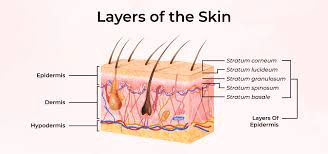
PDRN microneedling means creating temporary channels through the skin barrier with fine needles, then applying a polydeoxyribonucleotide solution so some of it reaches living tissue instead of sitting on dead cells. The needles do most of the work. They are why a topical PDRN does anything at all. But the fraction that actually arrives in the dermis is small, and nobody has measured it in humans.
That is the honest summary, and the rest of this guide explains why it is the summary, what a defensible protocol looks like, and where the evidence runs out.
Why is microneedling used with PDRN in the first place?
Because PDRN cannot get through intact skin on its own.
PDRN is a mixture of DNA fragments with molecular weights between 50 and 1500 kDa and chain lengths from roughly 50 to 2000 base pairs, according to the 2021 Pharmaceuticals review by Galeano and colleagues. The stratum corneum — the outermost 10 to 20 micrometres of dead, lipid-cemented corneocytes — passively admits small, reasonably lipophilic molecules. PDRN is neither small nor lipophilic. It is a large, hydrophilic, negatively charged polymer. Applying it to unbroken skin and expecting dermal fibroblast activation is optimistic at best.
Microneedling changes the problem. Instead of persuading PDRN through the barrier, you make holes in the barrier. This is what drug delivery researchers call the “poke and patch” approach: solid needles create transient microchannels, the needles come out, and the drug is applied to pre-perforated skin. Chen and colleagues describe it plainly in their 2022 Frontiers in Bioengineering and Biotechnology review — solid microneedles are a skin pretreatment, not a delivery vehicle.
That distinction matters more than any marketing copy, and it is worth reading alongside our deeper treatment of why topical PDRN struggles to reach the dermis at all.
There is a second, independent reason the needles are there. Microneedling is a collagen induction therapy in its own right: controlled dermal wounding triggers the wound healing cascade and remodelling, entirely separately from whatever you put on the skin. PDRN’s own proposed mechanism — adenosine A2A receptor activation and the nucleotide salvage pathway — sits in the same repair biology. The two are plausibly complementary. Plausibly is doing real work in that sentence.
How much PDRN actually reaches the dermis?
Nobody knows. There is no published human measurement of dermal PDRN concentration after microneedling.
What can be said is directional, and it is not flattering to the label claim.
The same Chen review lists the fundamental weaknesses of poke-and-patch delivery as “low drug loading capacity, limited biological compatibility, and inaccurate dose administration.” The dose is inaccurate because it is uncontrolled. When a coated microneedle is engineered to carry a payload, the numbers get respectable — the review cites over 80% of coated bleomycin delivered into skin. That is a fundamentally different system from a pen passing over the face followed by a serum wiped across the surface.
Three things cap the delivered fraction:
The channels are a tiny share of the surface. Microchannels perforate a small fractional area of the treated skin. Everything applied outside a channel is on the stratum corneum, doing what it was doing before.
The channels close fast. Gupta and colleagues used impedance spectroscopy in human subjects (Journal of Controlled Release, 2011) and found that without occlusion, every microneedle-treated site recovered barrier function within 2 hours, across 500, 750 and 1500 µm geometries. Under an occlusive patch, resealing stretched to between 3 and 40 hours depending on needle length, needle count and cross-section. Ogunjimi and colleagues (Skin Pharmacology and Physiology, 2021) applied 800 µm arrays with occlusive patches at body sites and measured mean micropore closure at roughly 58 to 63 hours. Occlusion is the variable. An open face after a microneedling pass is the 2-hour scenario, not the 60-hour one.
Most of the product never enters. Wiping, wound fluid, and simple geometry mean the bulk of any serum applied to needled skin stays outside.
So the mechanism is real and the direction is right. The magnitude is unmeasured. Anyone quoting a specific “300% increased absorption” figure for PDRN is quoting a number that does not exist in the human literature. If you want the fuller version of that argument, our comparison of topical PDRN versus injection as delivery routes covers why an injection sidesteps this entire problem.

What does the evidence actually support?
This is where the honest answer is uncomfortable. Search PubMed for polydeoxyribonucleotide combined with microneedling and filter to clinical trials, and you get zero results. Not few. Zero.
The two most substantial 2025 PDRN reviews confirm the gap from the other direction. Kim’s Pharmaceutics comparison of polynucleotide and PDRN mentions microneedling exactly once, in passing, for a polynucleotide plus radiofrequency microneedling combination — no dedicated analysis. The Biomaterials Research review by Oh and colleagues does not mention microneedle delivery of PDRN at all, and states outright that “translating these findings to humans has proven challenging, with many uncertainties remaining.”
What does exist:
| Evidence | What it is | What it supports | What it does not support |
|---|---|---|---|
| Gupta 2011; Ogunjimi 2021 | Human impedance/TEWL studies of microchannel formation and closure | That microneedles breach the barrier, and for how long | Anything about PDRN specifically |
| Kim HM 2022, Molecules | UV-B irradiated HRM-2 mice; PDRN + vitamin C + niacinamide delivered by a 0.75 mm, 140-needle stamp at 7-day intervals | Reduced pigmentation, increased collagen/elastin, NRF2/HO-1 modulation — in mice | Human outcomes; and the study had no topical-only arm, so the microneedling’s own contribution is not isolated |
| Park HJ 2022, Molecules | Same lab, same mouse model and delivery system, melanogenesis endpoints | Anti-melanogenic mechanism via NNT — in mice | Same limitations |
| Wan 2025, PRS Global Open | Case series, n=3, 0.5 mm needle, 3 sessions at 4-week intervals; activating solution contained PDRN 1% | Proof of concept only | Efficacy — the authors state the absence of a control group means improvements “cannot definitively” be attributed to the combination |
| Alster & Graham 2018; StatPearls | Microneedling reviews | Microneedling itself for scarring, rhytides, texture; transdermal drug delivery as an application | PDRN as the delivered drug |
Read the second row carefully. The closest thing to a PDRN microneedling study is a mouse experiment where every group received microneedling — including the controls, which got distilled water through the same stamp. That design tells you what the compound adds on top of needling. It cannot tell you what the needling adds on top of the compound, which is the question consumers are actually asking.
So: microneedling as a procedure has an evidence base. PDRN as an injectable has an evidence base. PDRN plus microneedling, as a specific combination, in humans, does not. It is a mechanistically sensible extrapolation, not a proven protocol. Our companion piece on what results to realistically expect from PDRN and microneedling sits on the same evidence and does not soften it either.
What should actually go on the skin during a session?
Sterility, not concentration. This is the part that gets skipped.
Once channels are open, whatever is on the surface has a direct route into the dermis — where the immune system evaluates it very differently from how it evaluates something sitting on dead cells. Soltani-Arabshahi and colleagues documented the consequence in JAMA Dermatology in 2014: three women developed facial granulomas after microneedling with cosmetic serums (a vitamin C product in two cases, hydrating and pigment gels in the third). One was hospitalised with fever, joint pain and erythema nodosum. The authors’ conclusion is the sentence to remember — applying “various nonapproved topical products before a microneedling procedure can introduce immunogenic particles into the dermis and potentiate local or systemic hypersensitivity reactions” — and they recommended limiting microneedling to products approved for intradermal injection.
That is not a hypothetical risk profile. It is the reason a consumer PDRN serum with fragrance, preservatives and botanical extracts is the wrong thing to needle into a face, however good the PDRN percentage on the box is. Cosmetic formulations are designed to be tolerated on skin. They are not sterile injectables.
Which is where PDRN topicals genuinely earn their place: not in the pass, but in the days around it, on skin that has resealed and is rebuilding a barrier. A cream formulated for that window is doing an achievable job rather than an imaginary one — the Rejuran Intensive Cream c-PDRN is built as a barrier and recovery cream first, which is the honest role for a topical here, rather than pretending to be an injectable.
If your interest is specifically in a clinic pen protocol, our page on pairing PDRN with Dermapen microneedling goes into device handling in more detail, and combining PDRN with lasers and energy devices covers the adjacent question of stacking modalities.
What needle depth is appropriate by area?
Depth should track the thickness of the tissue underneath it, not a number someone read on a forum.
The StatPearls microneedling monograph gives the broad frame: longer needles of 1.5 to 2.0 mm for scars, 0.5 to 1.0 mm for aging skin and rhytides, with the note that thick sebaceous skin such as the nose tolerates deeper penetration than delicate periocular skin.
For area-specific figures, the most concrete published set comes from Shauly and colleagues in Aesthetic Surgery Journal Open Forum (2023), who state the principle explicitly: needle depth should reflect the relative differences in epidermal and dermal thickness throughout the face. Their measurements put the thinnest dermis at the upper eyelid and the thickest at the nasal side walls. Note the important caveat: these are radiofrequency microneedling depths, and RF devices deliver energy at the needle tip, so they do not transfer one-to-one to a mechanical pen.
| Area | Depth cited (RF microneedling) | Note |
|---|---|---|
| Forehead / temporal | ≥ 1.5 mm | Thicker dermis |
| Malar (cheek) | 1.0 mm | |
| Nasal side walls | 2.0 mm (stated device maximum) | Thickest dermis measured |
| Perioral | 0.5 mm | Thin, delicate |
| Neck | 1.5 mm | Higher caution — thin skin, scarring risk |
Two things follow. First, depth for delivery and depth for collagen induction are different targets. You only need to cross the stratum corneum — tens of micrometres — to open a delivery channel. You need to reach the reticular dermis to remodel collagen. A 0.25 mm home roller can do the first and cannot do the second. Second, deeper is not automatically better. A cadaver and ultrasound study by Yi and colleagues (Skin Research and Technology, 2023) found total skin thickness varies from roughly 1 to 2 mm depending on site and ethnicity, and that a 2 mm needle at 90 degrees landed below the dermis at the anterior cheek. Depth that overshoots the dermis is not delivering more PDRN. It is bruising.
Anyone treating darker Fitzpatrick skin types needs to weigh depth against pigmentation risk before anything else.
How far apart should sessions be?
The floor is set by healing, not by scheduling convenience.
StatPearls states treatment can be repeated after a minimum of 3 weeks, and describes histological work showing significant collagen increases from 4 sessions one month apart, with changes still evident at 6 months post-procedure. The Wan case series used 3 sessions at 4-week intervals. The mouse studies used 7-day intervals — in mice, on a 28-day timeline, which does not transfer to human dermal remodelling.
Four-week spacing across three to four sessions is the interval most consistent with the published human microneedling protocols. Collagen remodelling is slow; the endpoint you are photographing at 6 months was mostly determined months earlier. Compressing sessions to chase faster results front-loads inflammation without front-loading collagen.
Professional versus at-home: what actually differs?
| Professional | At-home | |
|---|---|---|
| Depth | Adjustable, typically 0.5–2.5 mm; can reach reticular dermis | Rollers commonly 0.25–0.5 mm; realistically epidermal |
| Sterility | Single-use sterile cartridges | Reused rollers are a recognised infection route |
| Product | Can use sterile, injection-grade solutions | Cosmetic products only |
| Collagen induction | Yes, at appropriate depth | Minimal to none at typical home depths |
| Delivery enhancement | Yes | Yes — this is the one thing home devices genuinely do |
| Risk | Managed, with contraindication screening | Unmanaged |
The useful conclusion is narrow and worth stating clearly: a home device can improve topical delivery. It is not a collagen induction treatment. If your reason for owning one is absorption, it is doing something. If your reason is scar remodelling, it is not.
The same line runs through the safety question. A device that reaches living tissue is doing something a device that only abrades the surface is not — and it carries the corresponding infection, scarring and hypersensitivity risks that the two columns above are really describing. Depth is not a dial you turn up for better results. It is the dial that decides which set of risks you have taken on.
Aftercare that follows from the mechanism
Everything above dictates the aftercare, so it is short.
The first two hours matter most. Gupta’s data says an unoccluded site has resealed within 2 hours. That is your delivery window and your contamination window, and they are the same window. Keep hands, makeup, and unnecessary products off the face.
Keep it clean and simple. Nothing with fragrance, acids, retinoids or actives goes on skin with open channels. Bland and sterile beats sophisticated.
Sun protection is not optional. Freshly needled skin is inflamed skin, and inflammation plus UV is how you get post-inflammatory hyperpigmentation, which StatPearls lists among the recognised adverse effects.
Then support the barrier, don’t assault it. Once the channels have closed, the skin is rebuilding. A recovery balm exists for exactly this stretch — the Genabelle PDRN Enriched Recovery Balm is formulated for the post-procedure period rather than for penetration heroics, which is the correct ambition for a topical applied to skin that has just been perforated.
Our fuller PDRN aftercare guide covers the timeline in more depth.
Who should not do this?
StatPearls lists the contraindications for microneedling itself, and they apply regardless of what you are delivering:
- Active inflammatory acne in the treatment area — needling spreads it
- Active herpes labialis or any local infection — needling disseminates it; antiviral prophylaxis is standard where there is a history
- Moderate-to-severe eczema or psoriasis in the area
- Strong keloidal tendency — you are deliberately provoking collagen
- Immunosuppression
- Caution near recent botulinum toxin injection sites
Isotretinoin deserves a nuance rather than a slogan. The blanket 6-month wait is widely repeated. A 2025 Journal of Cosmetic Dermatology systematic review by Latifaltojar and colleagues covering 34 studies and 1,563 isotretinoin-treated patients found insufficient evidence for the traditional delay for most procedures, including dermaroller and fractional microneedling radiofrequency, while still advising against fully ablative lasers, mechanical dermabrasion and ablative radiofrequency. That is a genuine shift in the evidence, and it is a conversation for you and a prescriber — not a green light from a website.
Add one more, specific to this combination: anyone with a history of granulomatous or hypersensitivity reactions to cosmetic products should not have cosmetic products needled into them. The 2014 JAMA Dermatology cases are the reason.
FAQ
Does PDRN microneedling work? Microneedling works. PDRN injection has an evidence base. The specific combination has no published human clinical trials — a PubMed clinical-trial search for PDRN with microneedling returns zero results. The combination is mechanistically reasonable and unproven, and those are different things.
Can I just put my PDRN serum on after microneedling at home? You can, and some of it will get further than it otherwise would. But a cosmetic serum is not sterile and is not formulated for intradermal exposure. The documented granuloma cases in JAMA Dermatology all involved cosmetic serums applied around microneedling. The risk is small but it is real and it is disfiguring.
How long do the channels stay open? In human subjects without occlusion, barrier function recovered within 2 hours across all needle geometries tested. Under an occlusive patch, 3 to 40 hours depending on the array. Assume 2 hours for a normal facial treatment.
What needle depth do I need for PDRN delivery specifically? Only enough to cross the stratum corneum — a fraction of a millimetre. Depths of 1.0–2.0 mm are about collagen induction and reaching the reticular dermis, not about getting more PDRN in. Do not conflate the two goals.
Is PDRN microneedling better than PDRN injection? For getting PDRN into the dermis, no — an injection places a known dose at a known depth. Microneedling delivers an unmeasured fraction. What microneedling adds is its own collagen induction effect. They answer different questions. Rejuran and similar injectable skin boosters are where the injectable evidence lives.
The short version
Microneedling is the reason topical PDRN is worth discussing at all. Without it, a large, charged, hydrophilic DNA polymer sits on dead cells. With it, some fraction crosses into living tissue through channels that close within about two hours.
That fraction has never been measured in humans. No clinical trial has tested PDRN plus microneedling as a combination. The strongest supporting data is two mouse studies from one lab, neither of which included a group that skipped the microneedling.
None of that makes the protocol unreasonable. Both halves have independent mechanistic support and microneedling has its own evidence base as a procedure. It does mean the confident numbers you will see quoted — specific absorption multipliers, specific optimal depths for PDRN — are invented. The defensible protocol is the one built on what microneedling reliably does, with PDRN as a plausible addition, delivered by someone who screened you first and used something sterile.
If a page tells you more than that, it knows something the literature does not.