
There is no single best Korean PDRN serum, and the reason is uncomfortable: almost none of these brands disclose how much PDRN is actually in the bottle. The “100,000ppm” figures on the front of the box are not regulated, not standardised, and — in at least one case we checked against the ingredient list — describe something other than the PDRN itself. Here is how the Korean brands genuinely differ, once you stop reading the carton.
Rejuran, medicube, ANUA, VT Cosmetics, IOPE and Genabelle all sell PDRN topicals into the same K-beauty aisle. Every roundup ranks them. Almost none explain what you are actually choosing between, because the honest answer — that the deciding variable is undisclosed — makes for a worse listicle.
We already maintain a ranked top 5 PDRN serums from budget to clinic-level and a top 5 PDRN brands review. This is not another ranking. It is the map underneath one.
What does “100,000ppm PDRN” actually mean on a Korean serum?
Essentially nothing, as a regulated quantity. There is no standard behind it.
Start with the arithmetic. 100,000 parts per million is 10% by weight — an enormous inclusion rate for a purified nucleic acid. Now check it against the one piece of information that is legally structured: the ingredient list.
Under the FDA’s Cosmetics Labeling Guide, ingredients must be declared in descending order of predominance, with one relevant exception — “Ingredients present at a concentration not exceeding 1% may be listed in any order after the listing of the ingredients present at more than 1% in descending order of predominance” (§ 701.3(f)(2)). The same guide notes, in a parenthesis that ought to be famous, that concentrations “need not be declared by regulation.”
So the label tells you rank, never amount. But rank still constrains amount: anything below the 1% boundary is, by definition, at 10,000ppm or less.
PDRN appears on INCI lists as sodium DNA or hydrolyzed DNA. Kim’s 2025 review in Pharmaceutics confirms it: PDRNs “are also increasingly being incorporated into cosmetic products for topical use and are registered as sodium DNA or hydrolyzed DNA.”
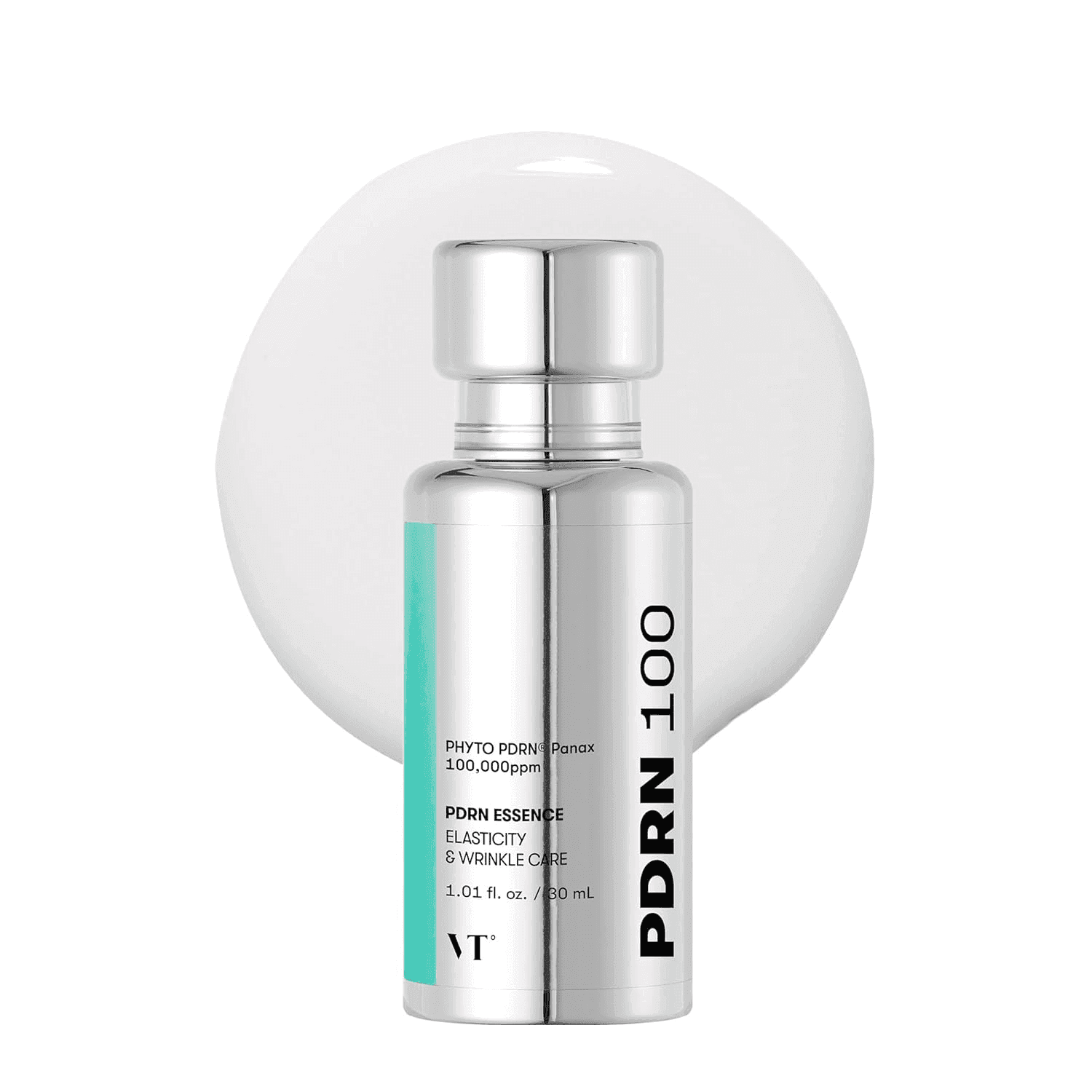
Now apply that to a real product. VT Cosmetics markets its PDRN Essence 100 as “Vegan 100,000 PPM PDRN.” On VT’s own published ingredient list, Sodium DNA is the last of 31 ingredients — after Disodium EDTA, after Allantoin, after four separate ceramides. For it to be present at 10%, every ingredient ahead of it would have to exceed 1% and run in descending order. That is not a plausible reading of that list.
The far more plausible reading: the 100,000ppm figure describes the PHYTO PDRN® ginseng root complex — the raw material — not the PDRN molecule. And indeed, Panax Ginseng Root Extract is the third ingredient, exactly where a 10% inclusion would sit.
That is not fraud. It is a raw-material percentage marketed as an active percentage, and the industry does it constantly. But the number on the box and the number a reader thinks they are buying are two different quantities. Our PDRN concentration guide covers why dosage claims resist comparison across the category.
What can you learn from a Korean PDRN serum’s ingredient list?
More than the marketing, less than you want. The test is simple: find “Sodium DNA” and see where it sits.
| Product | PDRN INCI name | Position in list | What you can conclude |
|---|---|---|---|
| VT PDRN Essence 100 | Sodium DNA | Last of 31 | Almost certainly in the ≤1% tier, despite a “100,000ppm” front-of-box claim |
| ANUA PDRN Hyaluronic Acid 100 Moisturizing Cream | Sodium DNA | 7th of ~46 | Ranked above collagen and every hyaluronic acid variant; not ruled out from the >1% tier |
Read that carefully, because it cuts both ways. ANUA’s placement is more encouraging than VT’s, but it is not proof of a high dose — because the ≤1% block can be listed in any order, a 7th-place ingredient could still be the first entry of that block. What you can say is narrower and still useful: ANUA declares its PDRN ahead of ingredients it actively markets; VT declares its PDRN dead last while printing a six-figure number on the carton. Those are different postures toward the reader.
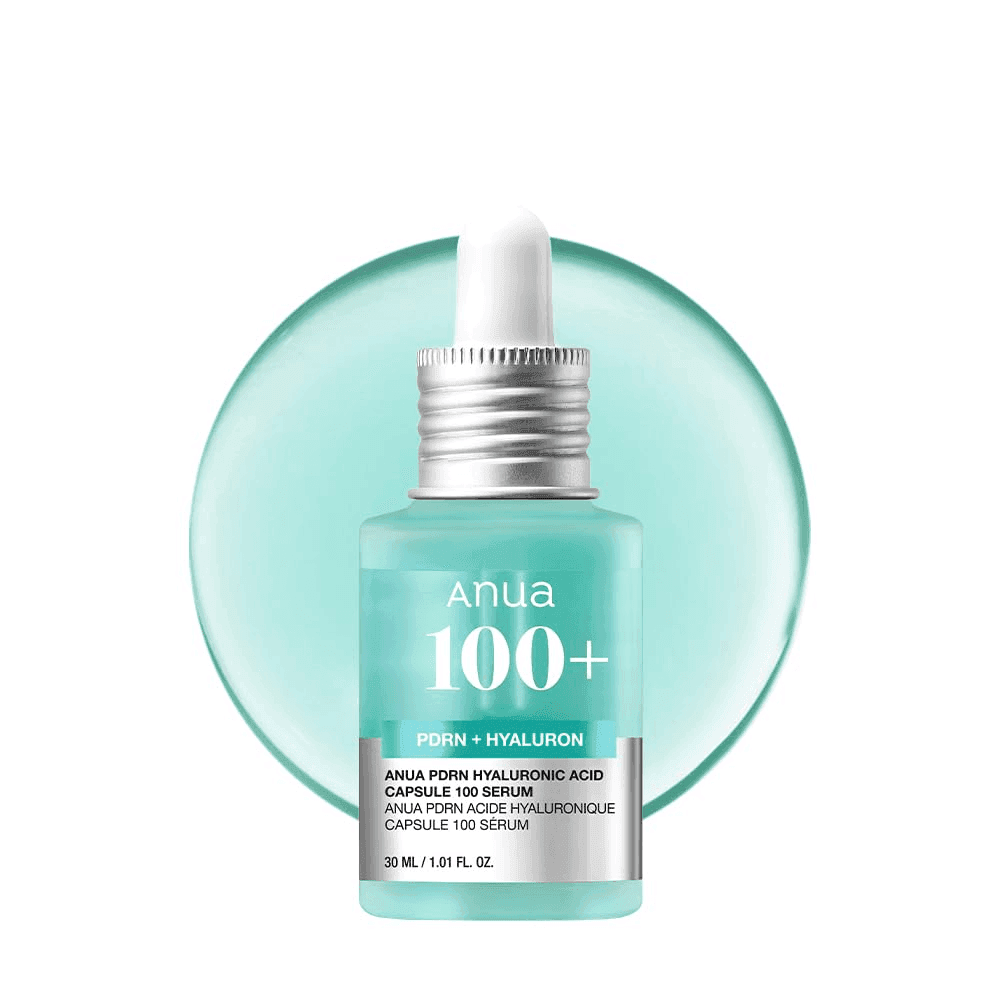
If you want the label that most nearly matches its pitch — PDRN declared high, paired with humectants and niacinamide rather than buried under a marketing number — the ANUA Hyaluronic PDRN Moisturizer is that product in this group, and its lightweight base suits oily or combination skin that a heavier ampoule would overload.
Two further limits, stated plainly:
- INCI cannot tell you the source. VT’s ginseng-derived PDRN declares as “Sodium DNA” — the same INCI name a salmon product uses. The label that would separate them does not exist.
- We could not verify ingredient-list positions for medicube or Genabelle from a source we were willing to treat as authoritative, so we are not characterising them. That gap is theirs to close, not ours to fill with a guess.
Is vegan PDRN as good as salmon PDRN?
Straight answer: the human evidence base for PDRN is entirely salmon-derived. Plant-derived PDRN has no human trials we could locate.
PDRN’s pharmacology was built on fish. Squadrito’s 2017 review in Frontiers in Pharmacology describes PDRN as deoxyribonucleotides “derived from Oncorhynchus mykiss (Salmon trout) or Oncorhynchus keta (Chum Salmon) sperm DNA,” purified at high temperature to recover “a >95% pure active substance with inactivated proteins and peptides.” The same review makes a point that matters enormously here: “The binding to adenosine A2A receptors is a unique property of PDRN and seems to be linked to DNA origin, molecular weight and manufacturing process.”
DNA origin. The authors who defined the molecule flagged source as a variable in whether it works at all.
The best evidence for the vegan side is real, and it is preclinical. Lee and colleagues published a 2023 study in Molecules on PDRN isolated from Panax ginseng adventitious root — the ingredient class VT’s PHYTO PDRN® sits in. Panax PDRN “acts as an agonist of the A2A receptor and increases the phosphorylation of FAK, AKT, and MAPK,” improved wound-healing regeneration by 30.6% in keratinocytes, and reached 92.0% re-epithelialisation by day 5 in a 3D skin model against 17.0% in untreated controls. Blocking the A2A receptor cut the effect — the experiment that makes a mechanism credible rather than merely asserted.
That is a good paper. Here is what secondary coverage routinely gets wrong about it, and we checked the original: salmon PDRN was not tested as a functional comparator. The study compared fragment size — “Panax PDRN had a DNA size slightly smaller than 100 base pairs, whereas salmon PDRN had a size slightly larger than 100 base pairs” — and ran no head-to-head efficacy arm. You will see it cited as showing plant PDRN “performed comparably to salmon PDRN.” It does not show that. It never measured it. Several authors are also affiliated with the company that developed the artificial skin model used, though the paper declares no conflict of interest and no external funding.
A parallel effort exists in microbes. Chae and colleagues’ 2025 paper in Current Issues in Molecular Biology reports the first Lactobacillus rhamnosus-derived PDRN, motivated by a candid problem with fish: “the limitations of seasonal availability, high production costs, and environmental sustainability have prompted investigations into alternative sources. Above all, salmon is a limited resource.” That work is also in vitro only.
| Salmon-derived PDRN | Plant/vegan PDRN (ginseng) | |
|---|---|---|
| Human trial evidence | Yes — placebo-controlled RCT in diabetic foot ulcers | None we could locate |
| A2A mechanism | Established, antagonist-confirmed | Demonstrated in vitro, antagonist-confirmed |
| Head-to-head vs the other | Not tested | Not tested |
| Fragment size | Slightly >100 bp | Slightly <100 bp |
| Declares on INCI as | Sodium DNA | Sodium DNA — indistinguishable |
Two things are true at once. Salmon PDRN has the evidence. Plant PDRN has a plausible mechanism, a real preclinical paper, and no human data. If you want to avoid animal derivatives, the VT COSMETICS PDRN 100 Essence is the ginseng-derived option this section is about — buy it because a vegan formula is what you want, which is a completely legitimate reason, not because you have been told it is equivalent. Nobody has run the study that would establish that.
One caveat the other way, for fairness: PDRN’s purification explicitly inactivates proteins and peptides, and protein is what drives fish allergy. Whether that makes a salmon-derived topical appropriate for a fish-allergic person is a question for a clinician who knows your history, not one a serum label can answer.
Our deeper piece on why PDRN sourcing matters more than marketing claims works through the raw-material side.
How do the Korean PDRN brands actually differ?
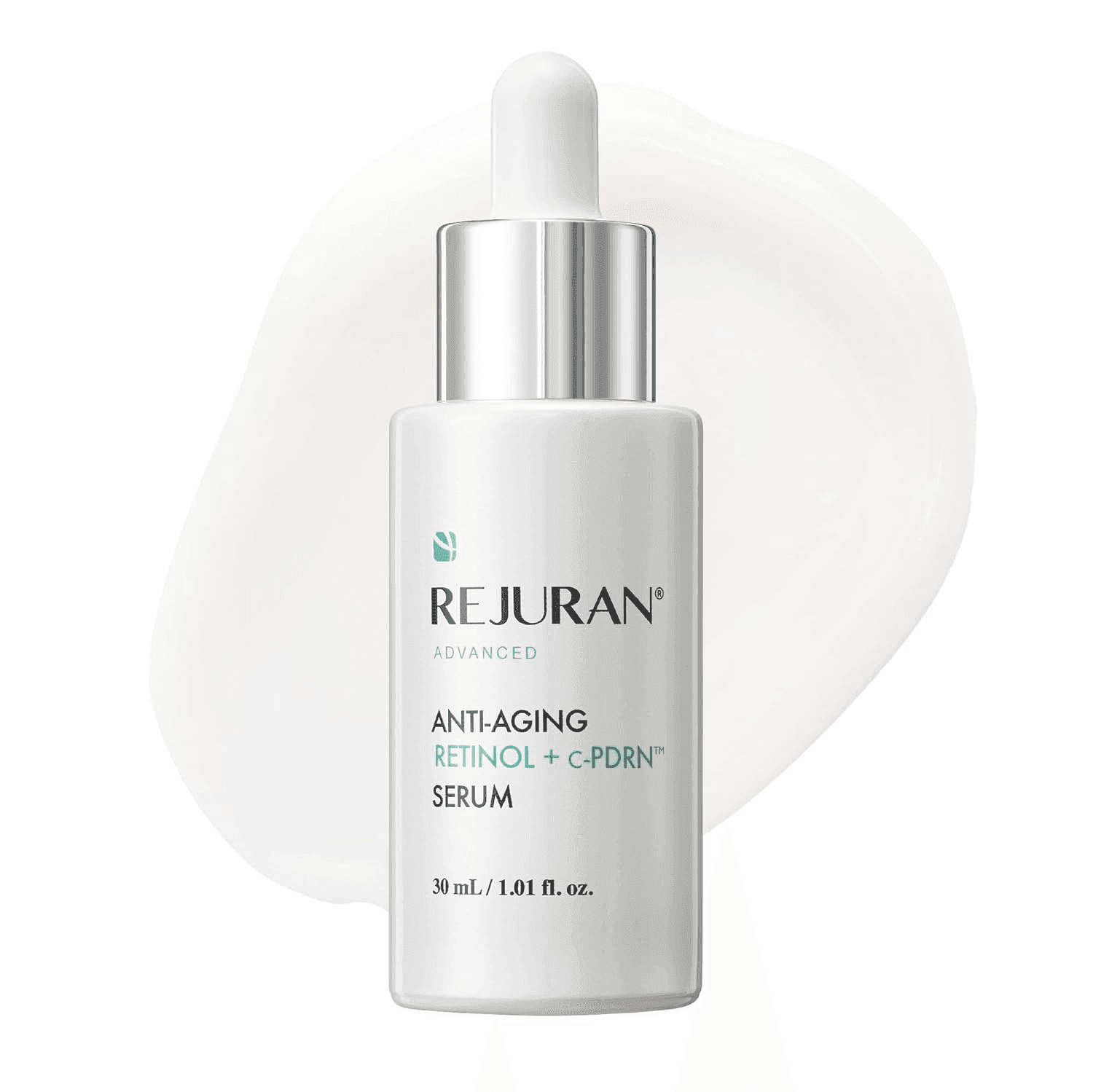
Rejuran is the reference name and the most misunderstood. Kim’s 2025 review notes that in South Korea “PN-based injectable products are regulated as medical devices” — Rejuran is a polynucleotide product, regulated as a device, not a drug. Its consumer ampoules borrow that clinical halo without inheriting the clinical evidence. Worth knowing too: the flagship aesthetic Rejuran trial, Pak and colleagues’ 2014 phase III against hyaluronic acid filler, was retracted in 2016. A Rejuran topical buys you the best-known name in PDRN at a premium price; it does not buy a proven aesthetic outcome. We go further in decoding Rejuran.
If you want that pedigree with clear eyes — buying the manufacturing standard clinics settled on rather than proof of a cosmetic result — the REJURAN Healer Turnover Ampoule is the honest expression of the trade.
VT Cosmetics is the vegan outlier: the most transparent about sourcing, the least about amount.
ANUA takes the opposite posture — no six-figure ppm claim we found, PDRN declared high, formulated around hydration and barrier support rather than a number.
medicube is the volume leader by a distance and the entry price point. We could not verify its PDRN disclosure to our standard, so we are not characterising its concentration.
Genabelle occupies the gentle, affordable, daily-use corner.
IOPE is the Amorepacific entry and the only one here built around a narrow use rather than general rejuvenation. If your interest is specifically the undereye — where a targeted formula beats a general one, and caffeine has an independent rationale for puffiness — the IOPE Bio PDRN Caffeine Shot Serum is designed for that job rather than adapted to it. Our evidence-led undereye guide sets expectations honestly.
Does any topical PDRN serum reach the dermis?
This is the question that makes concentration arguments smaller than they look.
PDRN is large. Squadrito’s review puts the molecular weight range at 50–1,500 kDa, “with a peak of the Gaussian distribution at 132 KDa.” Park and colleagues’ 2025 Pharmaceutics paper states the constraint directly: “efficient passive skin permeation is generally limited to <500 Da molecules,” and PDRN’s “anionic charge may limit passive diffusion across the stratum corneum and hinder cellular uptake.”
A 132 kDa molecule is orders of magnitude above the passive-permeation ceiling, and negatively charged besides.
This is why chasing a bigger ppm number is the wrong optimisation. A serum that doubles an active which cannot cross the barrier has doubled nothing. Fragment size, charge handling, delivery vehicle and mechanical assistance decide more than the headline figure. Our topical PDRN bioavailability guide and topical versus injection comparison both work this through.
Which Korean PDRN serum suits which reader?
Choose on posture and fit, since you cannot choose on dose.
- Avoiding animal derivatives: VT, on sourcing grounds — accepting the human evidence is not there.
- Oily or combination skin, label matching pitch: ANUA.
- The name clinics use: Rejuran, knowing about the retracted trial.
- Undereye specifically: IOPE.
- Trying the category cheaply: medicube, the entry point on price and volume.
- Sensitive skin, low-stakes daily use: Genabelle’s positioning fits, though we did not verify its disclosure.
- A proven aesthetic outcome from a topical: no Korean PDRN serum can promise that, at any price. That is the finding, not a hedge.
Frequently asked questions
Is a higher ppm PDRN serum better? Not reliably, and often not comparably. No standard defines what a PDRN ppm figure measures, and at least one major brand’s headline number appears to describe a raw-material complex rather than the PDRN molecule. A larger number from a different brand may be counting a different thing entirely.
How do I tell if a Korean serum’s PDRN is salmon or plant-derived? Not from the ingredient list — both declare as “Sodium DNA” or “hydrolyzed DNA” under INCI. You depend on the brand’s marketing copy saying so. VT states ginseng explicitly; a product that says nothing is very likely salmon-derived, since that is the default raw material, but that is an inference, not a label guarantee.
Does vegan PDRN work? It has a demonstrated A2A receptor mechanism in cells and 3D skin models, which is a real result. It has no human trials we could find, and has never been tested head-to-head against salmon PDRN. “Works in vitro” and “works on your face” are different claims.
Is Rejuran’s skincare line the same as the Rejuran injected in clinics? No. The injectable is a polynucleotide product regulated in Korea as a medical device and administered by a practitioner. A topical ampoule is a cosmetic. They share a brand, not a delivery route or a regulatory status. Our global PDRN regulatory overview maps the distinction.
Why won’t these brands just publish the concentration? They are not required to. FDA’s own labelling guide notes concentrations “need not be declared by regulation.” Disclosure is voluntary, and a brand that discloses a modest real number competes against one printing a large ambiguous one. That is the incentive, and it is why the category looks the way it does.
The honest summary
The ppm figures are marketing units, not regulated ones. Ingredient-list position is the only public signal, and it is weak. The evidence base runs on salmon; the vegan alternative is mechanistically plausible and clinically untested. And PDRN’s molecular weight means the whole concentration debate sits downstream of a barrier problem nobody in this aisle has convincingly solved.
So buy the one whose sourcing and texture you want, at a price you would not regret. That is a more rational basis than any number on the front of the box.