
The 7 Best PDRN Serums for 2026, Compared
This guide is for anyone deciding which PDRN (polydeoxyribonucleotide) serum to actually buy, rather than reading another list ranked one to ten for no clear reason. We did not test these on our own skin — we are a research team, not a clinic — so this is a comparison built on disclosed ingredient lists, verified product specs, PDRN format, and aggregated customer-review data from thousands of buyers on Amazon.
We weighted three things: how prominently PDRN actually appears in the formula (most brands do not disclose a percentage, so ingredient order is the honest proxy), what the rest of the formula is doing, and whether the product suits a specific person rather than everyone. PDRN's human evidence base is strongest for injectables, and topical penetration is genuinely limited, so we flag where a serum is realistically a good hydrator with a PDRN talking point versus a repair-led formula. Every pick below wins one use case, and each has at least one drawback that might send you to a different bottle.
- How prominently PDRN (sodium DNA) appears in the ingredient list, since almost no brand discloses a percentage
- What the surrounding formula does — hydration, soothing, barrier, brightening
- PDRN source: salmon/trout DNA (the material the human research used) vs plant-derived
- Format, texture, and which skin type it genuinely suits
- Aggregated customer-review volume and rating as a real-world signal
Affiliate disclosure: We earn a commission if you buy through the Amazon links on this page, at no extra cost to you. We are a research and editorial team, not clinicians, and we did not physically test these products — see our method below and our editorial policy. Prices and availability change; check the current price on Amazon before buying.
The quick winners
- Best Overall medicube PDRN Pink Peptide Serum (Salmon DNA) Check price
- Best Budget medicube Hyaluronic Multi Peptide PDRN Serum Check price
- Best Lightweight Essence VT Cosmetics PDRN 100 Essence Check price
- Best for Dry / Dehydrated Skin Anua PDRN Hyaluronic Acid Capsule 100 Serum Check price
- Best Premium / Brand Pedigree REJURAN Dual Effect Ampoule (c-PDRN) Check price
- Best for Texture & Pores medicube Exosome Shot PDRN Pink Collagen Serum Check price
- Best for Beginners Beauty of Joseon Pore Firming Serum (Red Bean PDRN + Peptide) Check price
Compare at a glance
| Product | Price | PDRN source | Format | Skin type | Size | |
|---|---|---|---|---|---|---|
| Best Overallmedicube PDRN Pink Peptide Serum (Salmon DNA) | $ | Salmon DNA | Serum | All / normal | 1.01 fl oz (30 ml) | Check price |
| Best Budgetmedicube Hyaluronic Multi Peptide PDRN Serum | $ | Salmon DNA | Serum (dual-layer) | Normal / combination | 1.01 fl oz (30 ml) | Check price |
| Best Lightweight EssenceVT Cosmetics PDRN 100 Essence | $$ | Ginseng extract (not DNA); trace Sodium DNA, source not stated | Essence | All, incl. fish-allergy concern | 1.01 fl oz (30 ml) | Check price |
| Best for Dry / Dehydrated SkinAnua PDRN Hyaluronic Acid Capsule 100 Serum | $$ | Salmon DNA | Serum | Dry / dehydrated | 1.01 fl oz (30 ml) | Check price |
| Best Premium / Brand PedigreeREJURAN Dual Effect Ampoule (c-PDRN) | $$$ | Salmon DNA (c-PDRN) | Ampoule | Normal / mature | Varies by set | Check price |
| Best for Texture & Poresmedicube Exosome Shot PDRN Pink Collagen Serum | $$ | Salmon DNA | Spicule serum | Normal / resilient | 1.01 fl oz (30 ml) | Check price |
| Best for BeginnersBeauty of Joseon Pore Firming Serum (Red Bean PDRN + Peptide) | $ | Plant (red bean) | Serum | Sensitive / beginner | 1.01 fl oz (30 ml) | Check price |
The picks, reviewed
medicube PDRN Pink Peptide Serum (Salmon DNA)
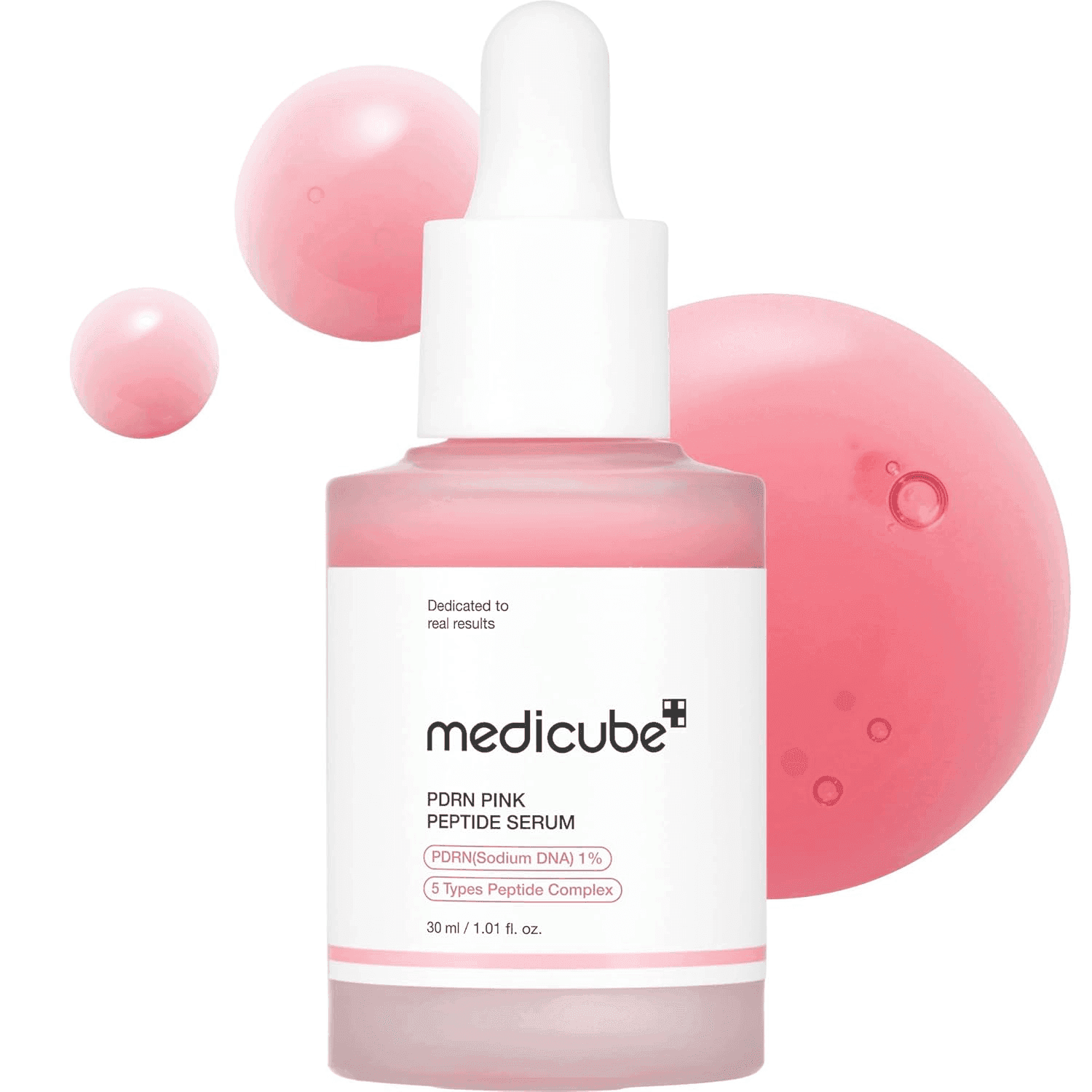
The most-reviewed PDRN serum on Amazon by a wide margin, with salmon DNA plus a five-peptide and niacinamide base that does more than the PDRN alone.
Pros
- Salmon DNA — the same source class the human PDRN research is built on
- Genuinely multi-active: five peptides, niacinamide and adenosine share the work
- Inexpensive for the ingredient list, and hugely reviewed so quality control is consistent
Cons
- Sodium DNA is 8th of 40, fairly high, but the visible results are as much niacinamide and peptides as PDRN
- Contains fragrance, which reactive skin may not tolerate
- The pink colour is cosmetic, not a sign of potency
| PDRN source | Salmon DNA |
|---|---|
| Format | Serum |
| Skin type | All / normal |
| Size | 1.01 fl oz (30 ml) |
| Key actives | PDRN, 5 peptides, niacinamide, adenosine |
| Fragrance | Yes |
Why we picked it: It is the safest first PDRN serum to recommend: the source is the researched one, the supporting formula is legitimately good, the price is low, and nearly twenty thousand ratings mean you know what you are getting. It wins on the balance of evidence, formula and value rather than on any single hero claim.
What it's like to use: Reviewers consistently describe a lightweight, fast-absorbing serum that layers cleanly under moisturiser and gives a short-term plumping glow. It is a maintenance product, not a dramatic corrector, which is the honest ceiling for any topical PDRN.
Best for: Someone buying their first PDRN serum who wants a proven, well-rounded formula without overthinking it.
Who should skip it: You react to fragrance, or you specifically want a bare PDRN-and-hydration formula with nothing else in it.
The catch: Like every topical PDRN, the molecule is large and penetration is limited — do not expect it to reproduce what an in-clinic injection does.
On the label: DNA listed 8 of 40. Full ingredient analysis →
medicube Hyaluronic Multi Peptide PDRN Serum
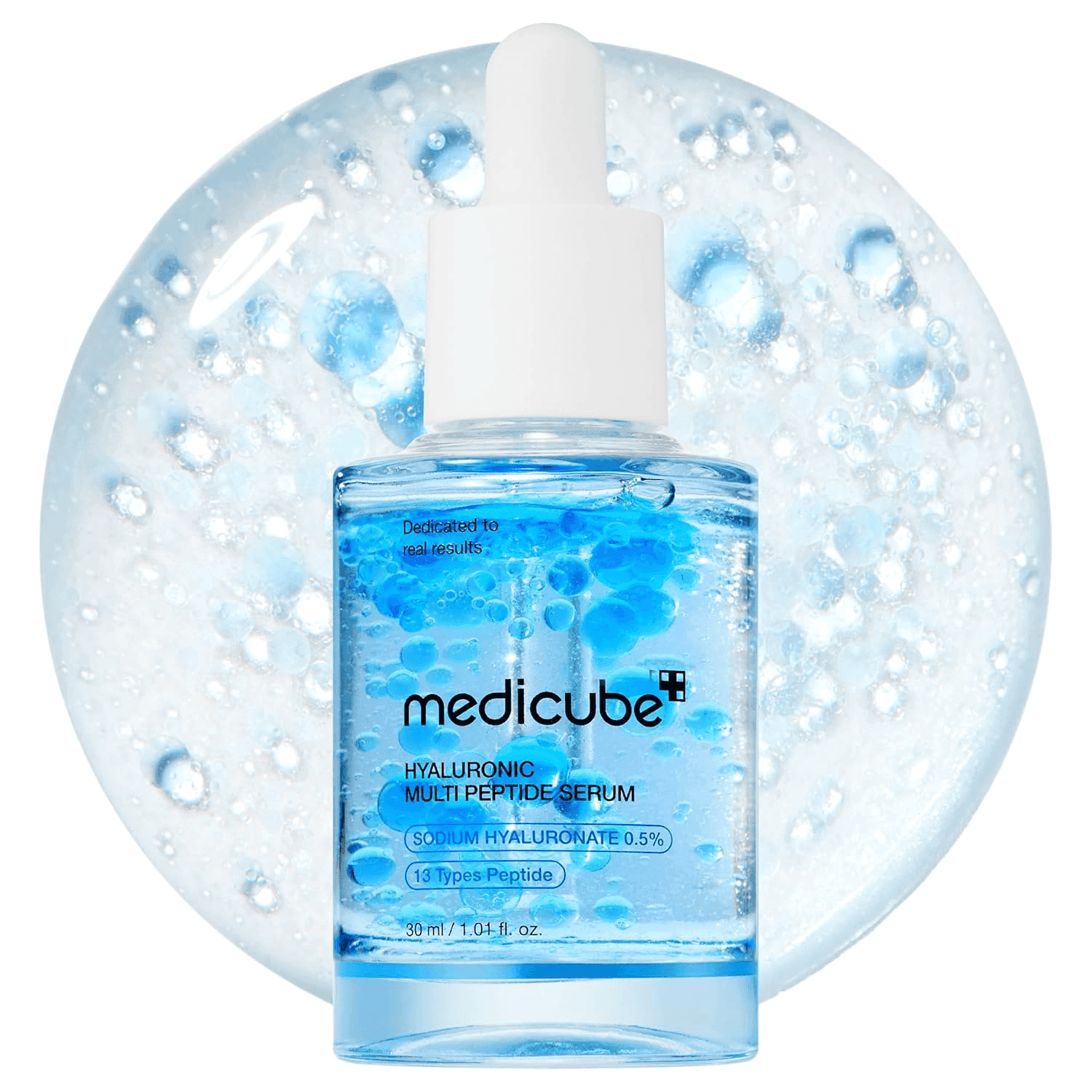
A lightweight, water-full PDRN-and-hyaluronic serum at the lowest sensible price, from the same brand as our overall pick.
Pros
- Very affordable while still pairing PDRN with hyaluronic acid and peptides
- Dual oil-and-serum layer aims to seal in the water it delivers
- Light hydrating base of glycerin, niacinamide, panthenol and hyaluronic acid for daily use
Cons
- Hydration-led, so it is more a good daily serum than a PDRN powerhouse
- The lightweight texture does little to occlude, so dry skin needs a cream over it
- No DNA figure on the label and Sodium DNA is 25th of 53; the peptides are disclosed at 0.1 ppm each
- Contains bergamot oil, a fragrant essential oil, although Amazon describes it as fragrance-free
| PDRN source | Salmon DNA |
|---|---|
| Format | Serum (dual-layer) |
| Skin type | Normal / combination |
| Size | 1.01 fl oz (30 ml) |
| Key actives | PDRN, hyaluronic acid, peptides |
| Fragrance | Yes (bergamot oil) |
Why we picked it: If budget is the deciding factor, this delivers the PDRN-plus-hydration combination most people actually want for the least money, without dropping to an unknown brand.
What it's like to use: Buyers report a thin, quick-sinking layer that plays well under sunscreen and makeup. The results skew toward smoothness and hydration rather than firmness.
Best for: Cost-conscious buyers, or anyone wanting a simple hydrating PDRN step to slot into an existing routine.
Who should skip it: You avoid essential oils, or you want a richer, treatment-style formula or visible firming.
The catch: It is a hydration serum with PDRN in it, not a repair serum built around PDRN; judge it on the water side.
On the label: DNA listed 25 of 53. Full ingredient analysis →
VT Cosmetics PDRN 100 Essence
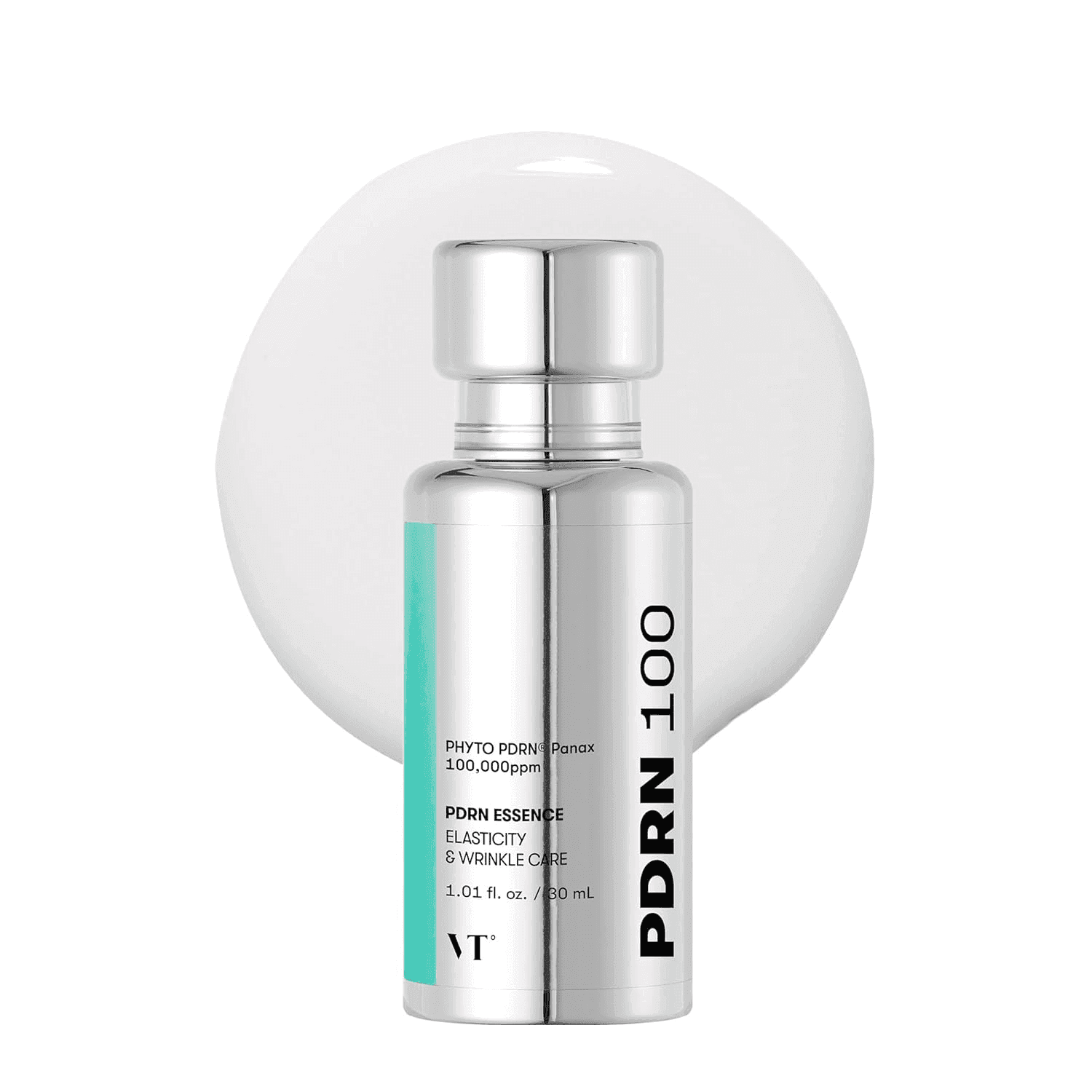
The best-known vegan "PDRN" option: its headline "PHYTO PDRN" is ginseng root extract, not DNA, and the Sodium DNA is the last of 31 ingredients.
Pros
- Marketed as vegan, fish-free PDRN for those who want to avoid marine-derived ingredients
- Fragrance-free, with niacinamide, ceramides and panthenol in the base
- Light, milky essence texture that layers easily
Cons
- The "PHYTO PDRN" is ginseng root extract, which is not DNA; the human PDRN evidence is built on salmon/trout DNA
- Sodium DNA is the last of 31 ingredients; the 100,000 ppm on the box fits the ginseng extract listed third, not the DNA
- Essence format carries less actives per drop than a concentrated serum
| PDRN source | Ginseng extract (not DNA); trace Sodium DNA, source not stated |
|---|---|
| Format | Essence |
| Skin type | All, incl. fish-allergy concern |
| Size | 1.01 fl oz (30 ml) |
| Key actives | Ginseng extract, niacinamide, ceramides, panthenol |
| Fragrance | Unscented |
Why we picked it: For readers who specifically want a vegan or fish-free option, this is the category leader and a well-made, fragrance-free essence — with the honest caveat that its 100,000 ppm figure describes ginseng extract, not DNA.
What it's like to use: Reviewers like it as a hydrating glow layer; the effect is dewiness and comfort rather than correction.
Best for: Vegan routines, or anyone with a fish/shellfish allergy concern who still wants a PDRN-style essence.
Who should skip it: You want the specific salmon-DNA material the clinical literature studied.
The catch: The ginseng "PHYTO PDRN" is not DNA and the actual Sodium DNA is trace-level, so you are buying a ginseng essence, not a PDRN treatment.
On the label: DNA listed 31 of 31. Full ingredient analysis →
Anua PDRN Hyaluronic Acid Capsule 100 Serum
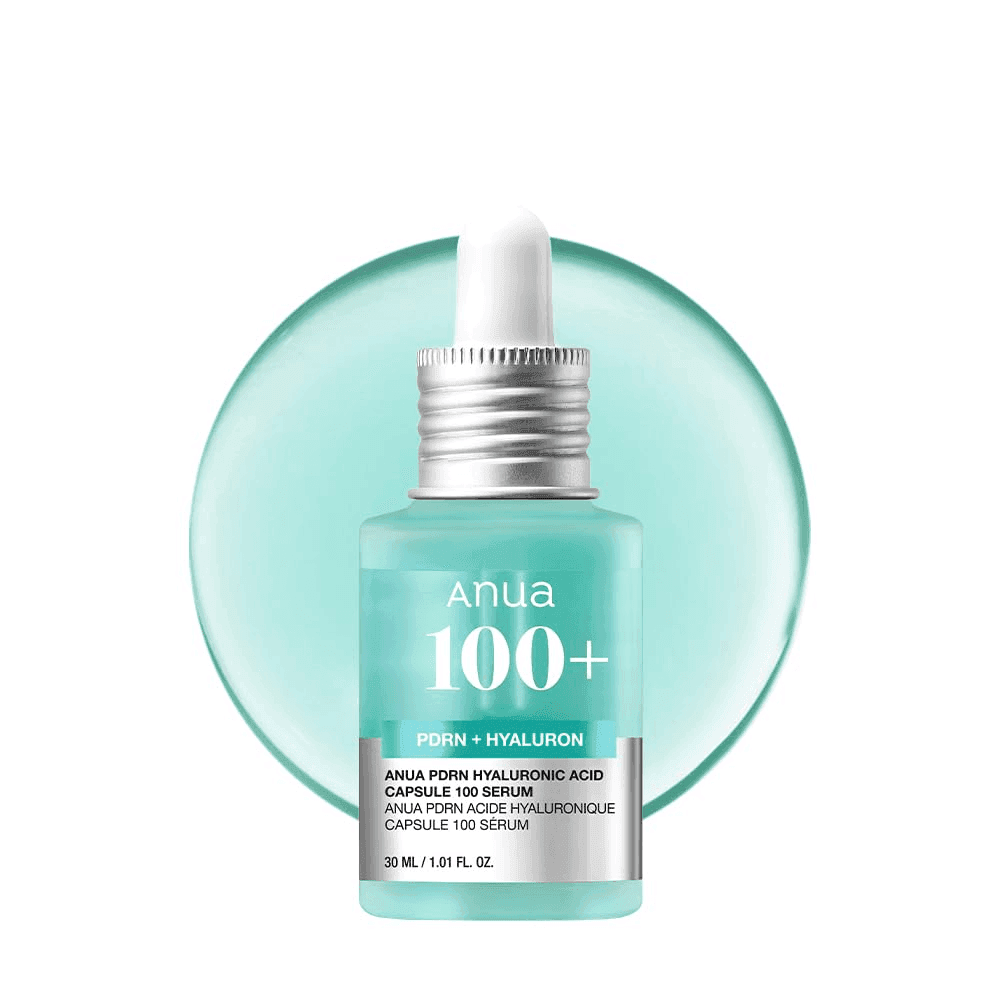
A hydration-first salmon-DNA serum from a popular K-beauty brand, built around a hyaluronic base that suits parched skin.
Pros
- Salmon-derived PDRN carried in a strong multi-weight hyaluronic base
- Comfortable, cushioning feel that dry skin tends to prefer
- Well-reviewed brand with reliable formulation
Cons
- Sodium DNA sits well down the ingredient list, so this is a hydration serum first and a PDRN serum second
- Pricier per millilitre than the medicube options
- Not the pick if your goal is firming rather than moisture
| PDRN source | Salmon DNA |
|---|---|
| Format | Serum |
| Skin type | Dry / dehydrated |
| Size | 1.01 fl oz (30 ml) |
| Key actives | PDRN, hyaluronic acid complex |
| Fragrance | Fragrance-free |
Why we picked it: When the primary problem is tightness and dehydration, its hyaluronic-led formula is the most comfortable of the salmon-DNA options, and the brand has a strong reliability record.
What it's like to use: Buyers describe lasting hydration and a plumped look; it works best sandwiched between a hydrating toner and a cream.
Best for: Dry, dehydrated or winter skin that wants water and a PDRN talking point in one step.
Who should skip it: Your skin is oily or you specifically want a firming-focused treatment.
The catch: Judge it on the water side of the equation, not the regeneration side — the PDRN is a supporting act here.
On the label: DNA listed 21 of 34. Full ingredient analysis →
REJURAN Dual Effect Ampoule (c-PDRN)
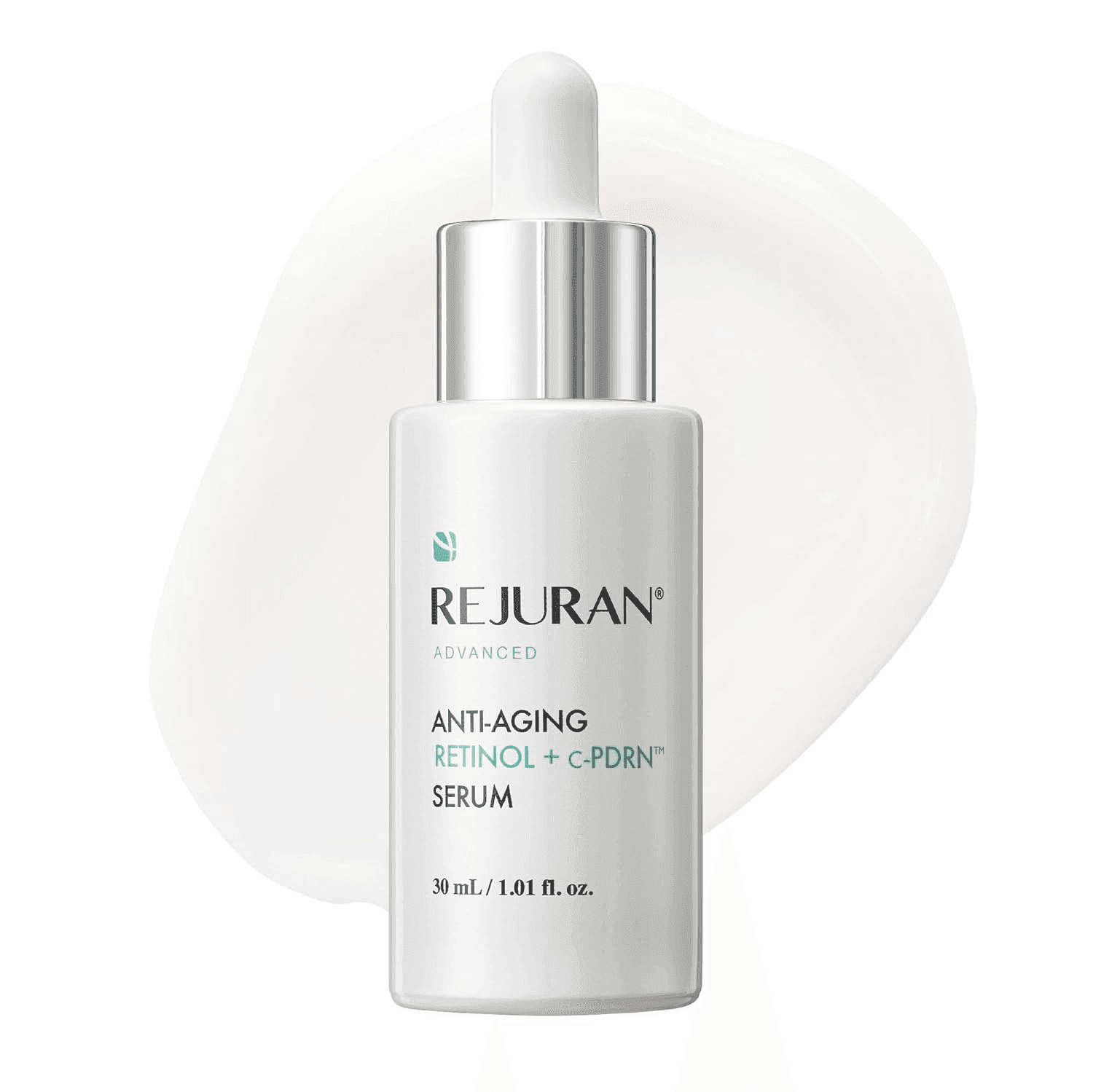
The at-home ampoule from the brand behind the well-known Rejuran clinic injectables — the prestige pick, with the caveats that come with it.
Pros
- From the most recognised clinical PDRN brand, with a concentrated ampoule format
- Positioned as a maintenance product between or instead of clinic visits
- Higher perceived quality and packaging for gifting
Cons
- Substantially more expensive per millilitre than every other pick
- A topical ampoule is not a diluted version of the injectable — the delivery is completely different
- The brand's flagship aesthetic trials have been retracted, so the clinic reputation outruns the published evidence
| PDRN source | Salmon DNA (c-PDRN) |
|---|---|
| Format | Ampoule |
| Skin type | Normal / mature |
| Size | Varies by set |
| Key actives | c-PDRN dual complex |
| Fragrance | None listed |
Why we picked it: It earns a place for buyers who want the Rejuran name and a concentrated format for maintenance, and are comfortable paying a premium for brand pedigree rather than proven topical superiority.
What it's like to use: Reviewers report a nice glow and a premium feel; the experience is closer to a luxury serum than a clinical event.
Best for: Existing Rejuran clinic patients maintaining between sessions, or gift buyers who want the recognised brand.
Who should skip it: You are price-sensitive or expect a topical to reproduce the in-clinic injection result.
The catch: You are paying largely for the brand: the topical has no published evidence of matching the injectable, and the injectable evidence itself is thinner than the marketing implies.
On the label: DNA listed 16 of 40. Full ingredient analysis →
medicube Exosome Shot PDRN Pink Collagen Serum
A spicule ("shot") serum that pairs PDRN with exosome and collagen claims and a mild physical resurfacing action aimed at texture.
Pros
- Microspicules give a mild resurfacing action that targets rough texture and pores
- Combines PDRN with exosome and collagen marketing actives
- Well-reviewed and widely available
Cons
- Spicules can sting or irritate sensitive and reactive skin
- Stacks so many actives that you cannot attribute results to the PDRN specifically
- Exosome content in a shelf-stable topical is a marketing-heavy claim with little independent support
- The "99% pure Salmon PDRN" is raw-material purity; the label discloses Sodium DNA at 10 ppm (0.001%)
| PDRN source | Salmon DNA |
|---|---|
| Format | Spicule serum |
| Skin type | Normal / resilient |
| Size | 1.01 fl oz (30 ml) |
| Key actives | PDRN, spicules, collagen, exosome claim |
| Fragrance | None listed (contains alcohol) |
Why we picked it: If your main concern is rough texture and visible pores rather than hydration, the physical spicule action is a genuinely different mechanism from the other picks and has an enthusiastic review base.
What it's like to use: Users report smoother texture and a temporary tightening; a mild prickling on application is normal and part of how it works.
Best for: Resilient skin focused on texture and pores that tolerates a mild physical exfoliating action.
Who should skip it: You have sensitive, rosacea-prone or compromised-barrier skin.
The catch: At a disclosed 10 ppm, the PDRN is a trace: you are buying a spicule texture treatment, not a PDRN serum.
On the label: DNA listed 22 of 50 (label states 10ppm). Full ingredient analysis →
Beauty of Joseon Pore Firming Serum (Red Bean PDRN + Peptide)
A gentle, low-cost daily serum from a trusted K-beauty name, using a plant "red bean PDRN" with peptides for a soft entry point.
Pros
- Very gentle, fragrance-free and beginner-friendly
- Trusted, widely-loved brand with a strong reliability record
- Low price and simple to slot into any routine
Cons
- Uses a plant "red bean PDRN" with essentially no independent efficacy data
- Newest and least-reviewed product in this guide
- Firming claims are marketing; expect gentle daily care, not correction
| PDRN source | Plant (red bean) |
|---|---|
| Format | Serum |
| Skin type | Sensitive / beginner |
| Size | 1.01 fl oz (30 ml) |
| Key actives | Plant PDRN, peptides |
| Fragrance | Fragrance-free |
Why we picked it: For someone nervous about starting actives, this is the softest landing: a reputable brand, a gentle formula and a low price, so the stakes of experimenting are minimal.
What it's like to use: Early reviews describe a comfortable, non-irritating daily serum with a light finish; results are subtle and slow.
Best for: First-time serum users, teens-and-up sensitive skin, or anyone easing into PDRN without commitment.
Who should skip it: You want the researched salmon-DNA material or a stronger, results-driven formula.
The catch: The "red bean PDRN" source is a novelty with no meaningful human data — treat this as gentle skincare, not evidence-based PDRN.
On the label: DNA listed 21 of 27. Full ingredient analysis →
How we researched this
- We started from the PDRN serums with the largest verified review bases on Amazon, then filtered to those that genuinely feature PDRN (sodium DNA) rather than mentioning it in passing.
- Because almost no brand discloses a PDRN percentage, we used ingredient-list order as the honest proxy for how prominent the PDRN actually is, and said so wherever it sits low.
- We separated salmon/trout-derived PDRN (the source the human literature studied) from plant-derived versions, and flagged the difference rather than treating them as equivalent.
- We assessed the surrounding formula — hydration, peptides, soothing agents, fragrance — because with topical PDRN the rest of the formula usually drives the visible result.
- We assigned each product a single use case so the guide helps you choose, rather than ranking near-identical serums one to seven for no reason. We did not physically test the products and do not claim to have.
How to choose a PDRN product
Source: salmon DNA vs plant-derived
The clinical research on PDRN used salmon and trout DNA. Plant-derived "PDRN" (ginseng, rice, red bean) is a newer marketing category with very little independent human data, and some of it is not DNA at all: VT's ginseng "PHYTO PDRN" is a root extract. Neither is dangerous, but if you want the researched material, choose a salmon-DNA serum. If you are avoiding fish-derived ingredients, a plant version is a reasonable trade with lower evidence.
Ingredient position matters more than the ppm on the front
Figures like "100,000 ppm" are unregulated marketing numbers. Regulators do not require brands to disclose a real percentage, so the most honest signal is where sodium DNA sits in the ingredient list. High up means it is a genuine feature; near the bottom means it is present at under one percent and the rest of the formula is doing the work.
Match the format to your skin, not the hype
A hydration-led serum suits dry skin; a spicule "shot" suits resilient skin chasing texture and will irritate sensitive skin; a lightweight essence suits oily or combination skin. The best PDRN serum for you is the one whose base formula fits your skin type, because that base is what you will actually feel.
Set realistic expectations for a topical
PDRN is a large molecule and topical penetration is limited. Expect hydration, comfort and a short-term glow from any of these serums, not the firming or scar remodelling associated with in-clinic PDRN injections. If your goal is the latter, a serum is maintenance, not a substitute.
Frequently asked questions
Do PDRN serums actually work, or is it just marketing?
Topical PDRN serums reliably hydrate and give a short-term plumping glow, and the supporting actives (peptides, niacinamide, hyaluronic acid) do real work. What they cannot reliably do is reproduce the firming and repair seen with PDRN injections, because the molecule is large and skin penetration from a leave-on product is limited. Buy one as a good hydrating serum with upside, not as a needle-free clinic treatment.
Is salmon-DNA PDRN safe if I have a fish allergy?
The main fish allergen is a muscle protein, while PDRN is purified DNA, so the theoretical risk is low — but the aesthetic studies specifically exclude fish-allergic people, so that group has the least safety data. If you have a fish or shellfish allergy, a plant-derived option or a patch test and a conversation with your doctor is the cautious route. This is general information, not medical advice.
Salmon PDRN vs vegan/plant PDRN — which is better?
Salmon-derived PDRN is the material the human research studied, so it has the stronger evidence base. Plant-derived versions (ginseng, red bean, rice) are gentler on the conscience for vegans and fish-allergic users but have little independent efficacy data. If evidence matters most, choose salmon; if avoiding animal-derived ingredients matters most, choose plant and accept the weaker data.
Where should a PDRN serum go in my routine?
After cleansing and any watery toner, on slightly damp skin, before your moisturiser and (in the morning) sunscreen. Layering a lightweight PDRN serum on damp skin and sealing it with a cream is the arrangement most likely to keep the humectants working. Give any of them at least four to eight weeks before judging results.
How much should I spend on a PDRN serum?
You do not need to spend a lot. Our best-overall and best-budget picks are among the cheapest here, and price mostly tracks brand and format rather than PDRN quality. A premium ampoule buys brand pedigree and packaging, not proven superiority, so start affordable unless you specifically want a particular brand.
Sources
- Squadrito F, et al. Pharmacological Aspects and Therapeutic Applications of Polydeoxyribonucleotides. Front Pharmacol, 2017. Link
- Galeano M, et al. Polydeoxyribonucleotide: A Promising Biological Platform. Pharmaceuticals, 2021. Link
- Park H, et al. Polynucleotide and Polydeoxyribonucleotide in Skin: penetration and formulation review. Pharmaceutics, 2025. Link
- U.S. FDA. Cosmetics Labeling Guide (ingredient declaration and concentration disclosure). Link
Why you can trust this guide
- Who wrote it
- PDRN Guide Editorial Team — Research & Editorial. We research PDRN products against the published literature and disclosed formulations. Read our editorial policy.
- How we researched it
- We compared products on disclosed ingredients, verified specifications, format, and aggregated customer-review data from Amazon. We did not physically test these products and do not claim to have.
- Updated
- Affiliate disclosure
- Some links are Amazon affiliate links; we may earn a commission at no extra cost to you. Products are chosen on formulation and evidence, never on commission rate.
- Not medical advice
- This is informational only. For your own skin or any injectable treatment, see a qualified healthcare provider.