
The 6 Best PDRN Products for Sensitive Skin in 2026
This guide is for anyone with reactive, easily-irritated skin who wants a PDRN product that calms rather than stings. We did not physically test these on our own skin — we are a research team, not a clinic — so every pick is judged on disclosed ingredient lists, verified product specs, fragrance and soothing-base composition, and aggregated review data from thousands of buyers, not on any claim to have tried them.
The organising idea is inconvenient for the marketing: with topical PDRN, tolerability is driven by the whole formula, not by the PDRN. PDRN is a large, poorly-penetrating DNA fragment with no acid, solvent or surfactant action, so when a "PDRN serum for sensitive skin" burns, it is almost always something else in the bottle — fragrance, an acid, an alcohol-forward base or spicules — that did it. So we selected for the quietest bases: fragrance-conscious, low-active formulas built around soothing agents like panthenol, centella and ceramides, with no spicules or exfoliating acids. Each product wins one use case and carries at least one drawback that might send you elsewhere.
- The base formula first: fragrance, alcohol position, and whether the surrounding actives are soothing or provocative, since the base is what reactive skin actually reacts to
- Soothing agents present — panthenol, centella (cica), ceramides, hyaluronic acid — versus stingers like acids, retinoids or physical spicules
- PDRN source: salmon/trout DNA (the material the human research used) vs plant-derived, which has little independent human data
- Format and texture, and whether it genuinely suits reactive or barrier-compromised skin
- Aggregated customer-review volume and rating as a real-world tolerance signal
Affiliate disclosure: We earn a commission if you buy through the Amazon links on this page, at no extra cost to you. We are a research and editorial team, not clinicians, and we did not physically test these products — see our method below and our editorial policy. Prices and availability change; check the current price on Amazon before buying.
The quick winners
- Best Overall for Sensitive Skin Dr.Althea 345 Relief Cream (PDRN) Check price
- Best Fragrance-Free VT Cosmetics PDRN 100 Essence Check price
- Best Soothing (Cica / Panthenol) Genabelle PDRN Enriched Recovery Balm Check price
- Best Barrier Repair NACIFIC Cica PDRN Barrier Repair Cream Check price
- Best Budget Tree of Life PDRN Serum (Salmon DNA & CICA) Check price
- Best Gentle Starter Anua PDRN Hyaluronic Acid Capsule 100 Serum Check price
Compare at a glance
| Product | Price | PDRN source | Format | Fragrance | Soothing base | Skin type | |
|---|---|---|---|---|---|---|---|
| Best Overall for Sensitive SkinDr.Althea 345 Relief Cream (PDRN) | $ | Plant DNA (rice bran or centella; retailers differ) | Cream | Fragrance-free | Niacinamide, panthenol, tea tree leaf water, centella | Sensitive / reactive | Check price |
| Best Fragrance-FreeVT Cosmetics PDRN 100 Essence | $$ | Ginseng extract (not DNA); trace Sodium DNA, source not stated | Essence | Unscented (labeled) | Panthenol, humectants | Sensitive, fragrance-reactive | Check price |
| Best Soothing (Cica / Panthenol)Genabelle PDRN Enriched Recovery Balm | $$$ | Salmon DNA | Balm / cream | Fragrance-free | Panthenol 10,000 ppm | Sensitive / post-procedure | Check price |
| Best Barrier RepairNACIFIC Cica PDRN Barrier Repair Cream | $ | Salmon DNA | Cream | Low | Centella 76% (cica) | Compromised / reactive barrier | Check price |
| Best BudgetTree of Life PDRN Serum (Salmon DNA & CICA) | $ | Salmon DNA | Serum | Fragrance-free (Amazon list) | Centella (cica) | Normal / mildly sensitive | Check price |
| Best Gentle StarterAnua PDRN Hyaluronic Acid Capsule 100 Serum | $$ | Salmon DNA | Serum | Fragrance-free | Hyaluronic acid complex | Sensitive / beginner | Check price |
The picks, reviewed
Dr.Althea 345 Relief Cream (PDRN)
A fragrance-free relief cream built on tea tree leaf water, niacinamide and panthenol, with plant-derived Sodium DNA near the end — a low-provocation base with the largest verified review count of anything in this guide.
Pros
- Built as a soothing relief cream first, so the base is niacinamide, panthenol and soothing extracts rather than a stack of actives
- Fragrance-free, with no acids, retinoids or spicules
- Nearly twenty thousand ratings, so the tolerance signal for reactive skin is unusually reliable
Cons
- Sodium DNA is 33rd of 38, added only in the Ver.2 reformulation, so the visible results come from the soothing base
- The DNA is plant-derived (Amazon says rice bran, Ulta says centella), not the salmon source the research used
- The "345 relief" positioning is about comfort, not correction — do not expect firming or repair
- The small 0.5 fl oz size runs out quickly if you use it as your everyday face cream
| PDRN source | Plant DNA (rice bran or centella; retailers differ) |
|---|---|
| Format | Cream |
| Fragrance | Fragrance-free |
| Soothing base | Niacinamide, panthenol, tea tree leaf water, centella |
| Skin type | Sensitive / reactive |
| Size | 0.5 fl oz (15 ml) |
Why we picked it: For reactive skin the safest recommendation is the quietest base, and this is a purpose-built relief cream from a brand with a strong sensitive-skin record, carrying a trace of plant PDRN inside a soothing niacinamide-and-panthenol formula rather than the other way round. It wins on the balance of a low-irritation, fragrance-free base and a huge review base, not on PDRN.
What it's like to use: Reviewers consistently describe it as a comforting, non-stinging daily cream that settles redness and tightness; the effect is calm and hydrated skin rather than any dramatic change.
Best for: Reactive, redness-prone or barrier-tired skin that wants PDRN inside a genuinely soothing moisturiser instead of a loaded treatment.
Who should skip it: You specifically want a high-strength PDRN treatment, or you need a large tub for full-face daily use.
The catch: Like every topical PDRN, penetration is limited — this is a calming moisturiser with PDRN in it, not a substitute for an in-clinic treatment.
On the label: DNA listed 33 of 38. Full ingredient analysis →
VT Cosmetics PDRN 100 Essence
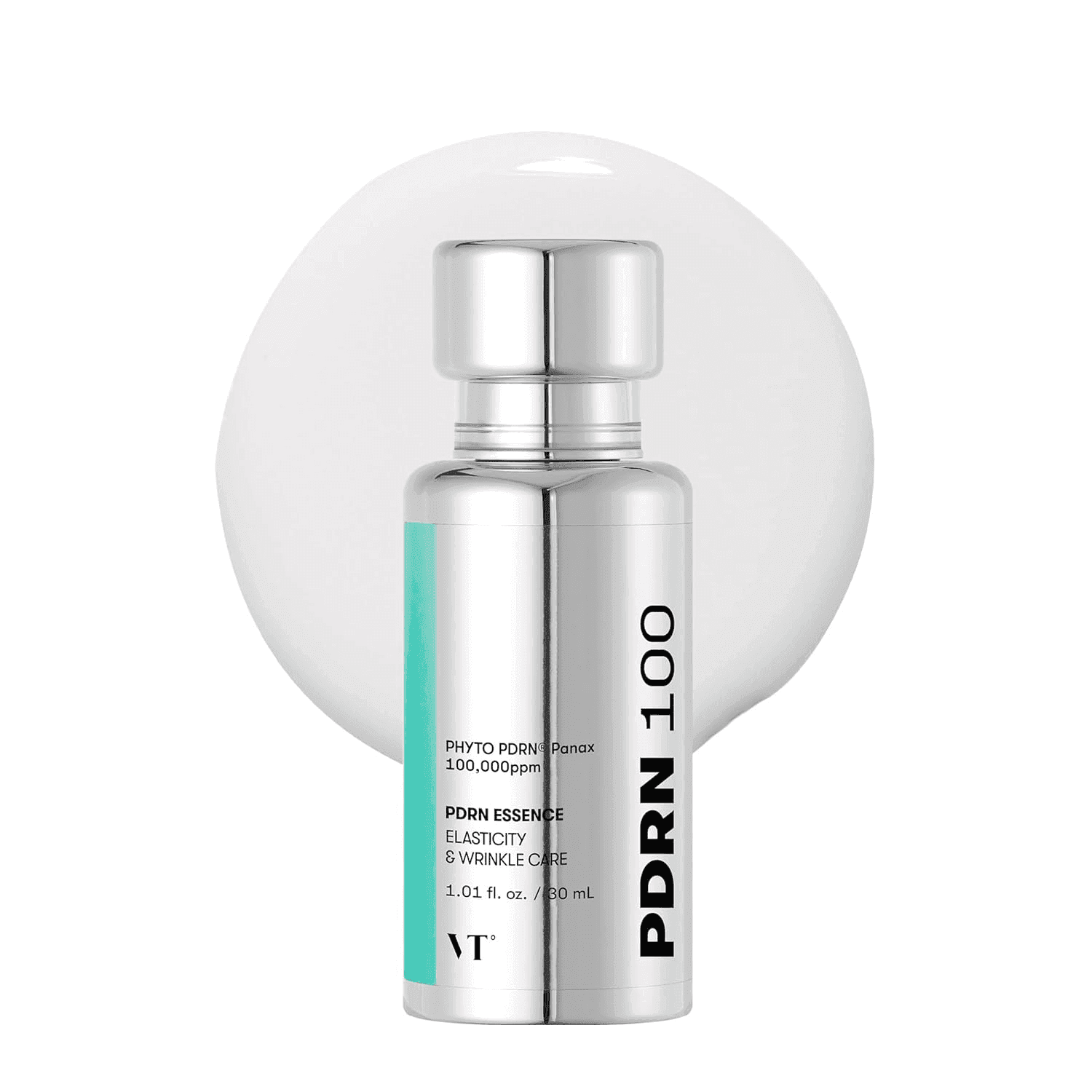
A light, unscented essence — the fragrance-free pick for skin that reacts to scent, with the honest trade-off that its "PHYTO PDRN" is ginseng extract, not DNA.
Pros
- Unscented, light milky essence with no added fragrance — the leading provocateur for reactive skin is simply absent
- Marketed as fish-free: VT says its PDRN is ginseng-sourced, though the label does not state the DNA's source
- Thin texture layers cleanly and does not occlude, which suits reactive combination skin
Cons
- The "PHYTO PDRN" is ginseng root extract, which is not DNA; the human PDRN evidence is built on salmon/trout DNA
- Sodium DNA is the last of 31 ingredients; the 100,000 ppm on the box fits the ginseng extract listed third
- "Fragrance-free" is an unregulated cosmetic claim — verify the ingredient list for botanical extracts if you react to plant terpenes
| PDRN source | Ginseng extract (not DNA); trace Sodium DNA, source not stated |
|---|---|
| Format | Essence |
| Fragrance | Unscented (labeled) |
| Soothing base | Panthenol, humectants |
| Skin type | Sensitive, fragrance-reactive |
| Size | 1.01 fl oz (30 ml) |
Why we picked it: If fragrance is your specific trigger, an unscented essence is the most direct answer, and this is the best-known fragrance-free PDRN option. We assign it the fragrance award with the honest caveat that a plant source is a lower-evidence trade, not a clean win.
What it's like to use: Reviewers like it as a comfortable, non-stinging glow layer; the effect is dewiness and hydration rather than any correction.
Best for: Anyone whose sensitive skin reacts to fragrance, or who wants a fish-free PDRN-style essence.
Who should skip it: You want the specific salmon-DNA material the clinical literature actually studied.
The catch: The ginseng "PDRN" is not DNA and the real Sodium DNA is trace-level; you are buying a gentle ginseng essence, not a PDRN treatment.
On the label: DNA listed 31 of 31. Full ingredient analysis →
Genabelle PDRN Enriched Recovery Balm
A panthenol-forward salmon-PDRN repair balm made for sensitive and post-procedure skin, with panthenol dosed higher than the PDRN itself.
Pros
- Panthenol (10,000 ppm) sits above the PDRN, so the soothing, redness-settling agent is genuinely the lead actor
- Salmon-derived PDRN in a rich, comforting balm base aimed squarely at reactive and recovering skin
- No acids, no spicules, no exfoliating actives to provoke a compromised barrier
Cons
- The rich balm texture is occlusive and can feel heavy or clog oily, acne-prone sensitive skin
- Small review base compared with the mass-market picks, so the tolerance signal is thinner
- Priced as a treatment balm, which is a lot to spend if your sensitivity is mild
| PDRN source | Salmon DNA |
|---|---|
| Format | Balm / cream |
| Fragrance | Fragrance-free |
| Soothing base | Panthenol 10,000 ppm |
| Skin type | Sensitive / post-procedure |
| Size | Varies |
Why we picked it: When the priority is calming an angry, over-reacting barrier, a panthenol-led balm is the most soothing format here, and this one is explicitly built for sensitive and post-procedure skin with the PDRN as a supporting note.
What it's like to use: Users describe it as intensely comforting on irritated or flaky skin, best applied as a last, sealing step at night; the pay-off is comfort and reduced redness, not firming.
Best for: Dry, reactive or post-procedure skin that wants a heavy, soothing repair layer.
Who should skip it: Your skin is oily or breakout-prone — the occlusive balm texture may be too much.
The catch: This is a soothing barrier balm with PDRN in it; judge it on the panthenol-and-comfort side, not on the PDRN.
On the label: DNA listed 17 of 57 (label states 5,000ppm). Full ingredient analysis →
NACIFIC Cica PDRN Barrier Repair Cream
A centella-heavy (76%) barrier cream with salmon PDRN, aimed at strengthening a compromised, easily-irritated barrier rather than at firming.
Pros
- Built on 76% centella asiatica, the best-evidenced soothing botanical for reactive skin, with PDRN and barrier lipids alongside
- Explicitly a barrier-repair cream, so the whole formula points at calming and strengthening rather than treating
- No fragrance-forward or acid actives to work against a weakened barrier
Cons
- Small review base (under 50 ratings), so the real-world tolerance signal is limited
- PDRN sits behind the centella, so this is a cica cream with PDRN, not a PDRN-led product
- A very high-percentage botanical (centella) can itself sensitise a small minority — patch testing matters even with a "calming" cream
| PDRN source | Salmon DNA |
|---|---|
| Format | Cream |
| Fragrance | Low |
| Soothing base | Centella 76% (cica) |
| Skin type | Compromised / reactive barrier |
| Size | Varies |
Why we picked it: For skin whose main problem is a leaky, over-reactive barrier, a centella-led repair cream is the right tool, and this pairs the best-evidenced calming botanical with PDRN and barrier lipids in a fragrance-quiet base.
What it's like to use: Early reviewers report a calming, non-greasy cream that visibly settles redness over a couple of weeks; it reads as barrier support, not a corrective treatment.
Best for: Compromised, over-exfoliated or reactive barriers that need rebuilding with a soothing, low-active cream.
Who should skip it: You are in the small group that reacts to concentrated centella, or you want a large, established review base before buying.
The catch: The 76% centella does most of the visible work; treat the PDRN as a supporting ingredient, not the reason it helps.
Tree of Life PDRN Serum (Salmon DNA & CICA)
The most-reviewed PDRN serum on Amazon by a huge margin, pairing salmon DNA with cica at the lowest sensible price — a low-cost way to try PDRN on reactive skin.
Pros
- Extremely affordable while still combining salmon DNA with centella (cica) for a soothing lean
- By far the largest review base here, so the formula is consistent and easy to return if it does not suit you
- Lightweight serum that layers under a moisturiser without occluding
Cons
- A mass-market SKU: no PDRN concentration is given, and Sodium DNA is 27th of 35, after ethylhexylglycerin
- Amazon-only, with no brand site: the only ingredient list is on the Amazon listing, so the formula is hard to verify
- Its 4.4 average sits below the boutique picks, reflecting a more variable experience across a very large buyer base
| PDRN source | Salmon DNA |
|---|---|
| Format | Serum |
| Fragrance | Fragrance-free (Amazon list) |
| Soothing base | Centella (cica) |
| Skin type | Normal / mildly sensitive |
| Size | 1 fl oz (30 ml) |
Why we picked it: If you want to try a salmon-PDRN serum on reactive skin without committing money, this is the cheapest credible option, and the cica in the base gives it a soothing tilt rather than an active-heavy one.
What it's like to use: Buyers report a light, hydrating serum with a soft glow; results are subtle, and the enormous review base means the experience is well characterised.
Best for: Budget-conscious buyers, or mildly sensitive skin wanting a low-stakes first PDRN serum.
Who should skip it: Your skin is highly reactive and you want a formula you can verify beyond one Amazon listing, or you want a boutique-grade base.
The catch: This is an inexpensive hydrating serum with PDRN and cica in it, not a high-concentration or clinically-positioned product — value it on that basis.
On the label: DNA listed 27 of 35. Full ingredient analysis →
Anua PDRN Hyaluronic Acid Capsule 100 Serum
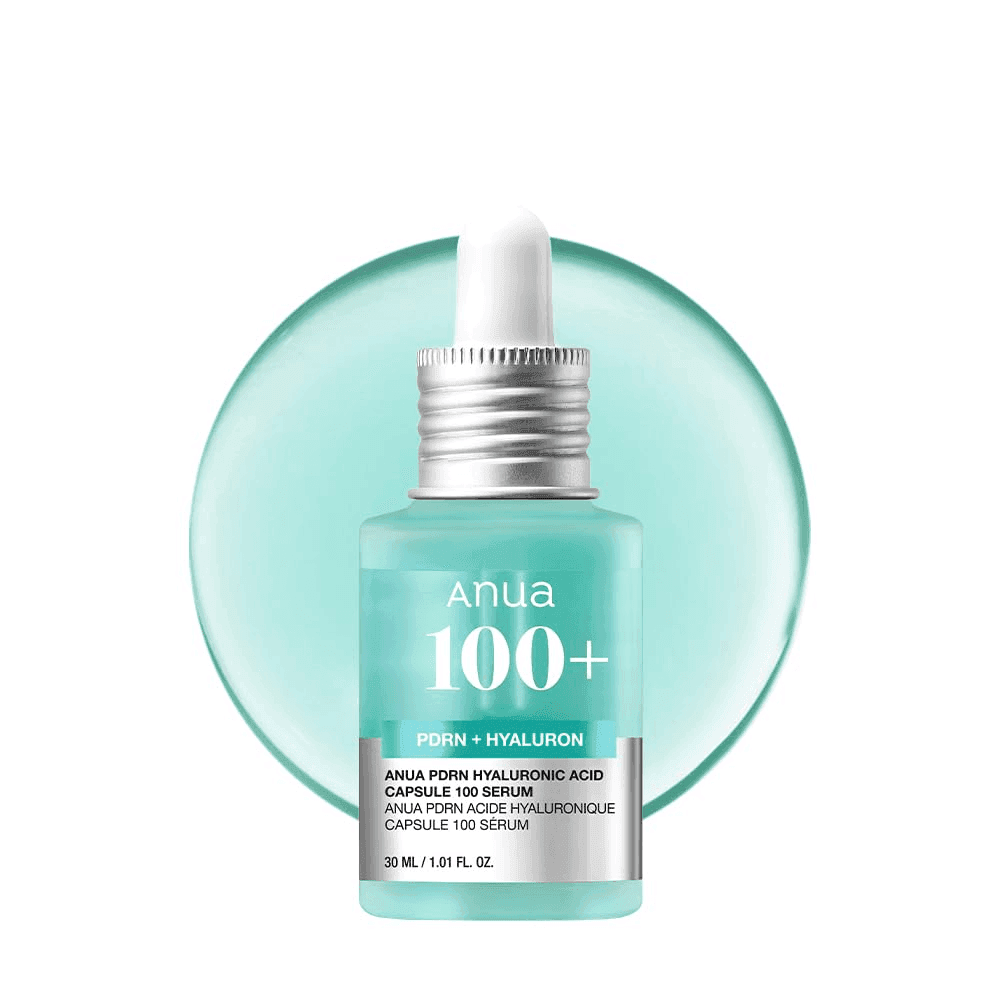
A fragrance-free, hydration-led salmon-PDRN serum from a trusted K-beauty brand — a soft, low-risk entry point for skin that is wary of new actives.
Pros
- Hydration-first formula around a multi-weight hyaluronic base, so the feel is cushioning and comfortable rather than stimulating
- Salmon-derived PDRN from a well-reviewed brand with a reliable, fragrance-conscious formulation record
- No acids, retinoids or spicules — a gentle way to establish whether your skin tolerates PDRN at all
Cons
- Sodium DNA sits well down the ingredient list, so this is a hydration serum first and a PDRN serum second
- Pricier per millilitre than the budget serum for a comparable, hydration-led result
- It is still a layering serum of several actives, so a plain soothing cream may be gentler for the most reactive skin
| PDRN source | Salmon DNA |
|---|---|
| Format | Serum |
| Fragrance | Fragrance-free |
| Soothing base | Hyaluronic acid complex |
| Skin type | Sensitive / beginner |
| Size | 1.01 fl oz (30 ml) |
Why we picked it: For someone nervous about starting a new active, the gentlest landing is a hydrating, fragrance-free serum from a brand with a strong reliability record — low stimulation, no acids, and easy to slot in and patch test.
What it's like to use: Reviewers describe lasting hydration and a comfortable, plumped feel with no sting; it works best sandwiched between a hydrating toner and a cream.
Best for: First-time PDRN users with sensitive skin who want a comfortable, hydration-led starting point.
Who should skip it: You want a firming-focused treatment, or your skin is reactive enough that a bare moisturiser is the safer first step.
The catch: Judge it on the hydration side, not the regeneration side — the PDRN is a supporting act in a HA serum.
On the label: DNA listed 21 of 34. Full ingredient analysis →
How we researched this
- We started from PDRN products with real review bases on Amazon across formats — serum, cream, essence and balm — then filtered to those genuinely featuring PDRN (sodium/salmon DNA) rather than mentioning it in passing.
- We selected by tolerability rather than by format: we prioritised quiet bases — fragrance-conscious, low-active, built around soothing agents like panthenol, centella and ceramides — and excluded products led by spicules, exfoliating acids or high alcohol.
- Because almost no brand discloses a PDRN percentage, we used ingredient-list order as the honest proxy, and where PDRN sits low we said so and judged the product on its soothing base instead.
- We separated salmon/trout-derived PDRN (the source the human literature studied) from plant-derived versions, and flagged the difference rather than treating them as equivalent.
- We assigned each product a single use case, and treated any fragrance or acid in the formula as a meaningful drawback for this audience. We did not physically test the products and do not claim to have.
How to choose a PDRN product
The base decides tolerability, not the PDRN
This is the whole point of the page. PDRN is a large, poorly-penetrating DNA fragment with no acid, solvent or surfactant action, so it has little plausible route to irritating you. When a "PDRN for sensitive skin" product stings, something else in the bottle almost certainly did it. Choose the quietest base — soothing agents, minimal actives, no fragrance — over the highest PDRN number. Our evidence review of <a href="/blog/is-pdrn-good-for-sensitive-skin/">whether PDRN is good for sensitive skin</a> walks through the mechanism in detail.
Fragrance, and why "fragrance-free" is not a guarantee
Fragrance is the leading cosmetic contact allergen, so for reactive skin it is the first thing to screen out. But "fragrance-free" and "for sensitive skin" are unregulated marketing phrases with no agreed standard behind them — nobody files substantiation with a regulator. Read the ingredient list for named fragrance materials such as linalool and limonene rather than trusting the front of the box.
Avoid spicules and acids if you are reactive
Some popular PDRN "shot" serums use microspicules for a physical resurfacing action, and others stack exfoliating acids. Both are genuinely useful for resilient skin chasing texture, and genuinely provoking for sensitive, rosacea-prone or barrier-compromised skin. Every product in this guide deliberately avoids them; if you shop beyond this list, treat spicules and low-pH acids as reasons to skip.
Fish-derived PDRN and fish allergy
Most PDRN here is salmon-derived. The main fish allergen is a muscle protein while PDRN is purified DNA, so the theoretical risk is low — but aesthetic trials specifically exclude fish-allergic people, so that group has the least safety data, not a clean bill of health. If you have a fish or shellfish allergy, a plant-derived option, a careful patch test and a conversation with your doctor is the cautious route. See our <a href="/blog/pdrn-side-effects-fact-vs-fiction-about-safety/">fact-versus-fiction breakdown of PDRN side effects</a>. This is general information, not medical advice.
Salmon vs plant-derived on reactive skin
Salmon/trout PDRN is the material the human research studied; plant-derived versions (ginseng, red bean, rice) are gentler on the fish-allergy question but have little independent efficacy data. Neither is more irritating by nature — both are non-provocative molecules — so for sensitive skin the choice is about evidence and the fish-allergy question, and the base formula still matters more than the source.
Frequently asked questions
Which PDRN format is gentlest for sensitive skin?
There is no single gentlest format — a soothing cream, a panthenol balm, an unscented essence and a hydration serum can all be low-irritation, and a spicule "shot" serum or an acid-loaded one can all be provoking. The format matters far less than what is in the base. Pick the product with the quietest ingredient list — fragrance-conscious, no acids or spicules, built around soothing agents — regardless of whether it is a serum, cream or essence.
Is the PDRN itself likely to irritate my sensitive skin?
On the available evidence, no. Sensitive skin reacts to acids, solvents, surfactants and fragrance; PDRN is a mixture of DNA fragments with none of those actions and a poorly-penetrating, large molecule. Its receptor activity is anti-inflammatory rather than provoking. If a PDRN product irritates you, the cause is almost always another ingredient — which is exactly why we selected these on their whole formula.
Is salmon-derived PDRN safe if I have a fish allergy?
The main fish allergen is a muscle protein while PDRN is purified DNA, so the theoretical risk is low — but the aesthetic studies specifically exclude fish-allergic people, so that group has the least safety data. If you have a fish or shellfish allergy, a plant-derived option (VT says its essence is ginseng-sourced and fish-free, though its label does not state the DNA's source), plus a patch test and a conversation with your doctor, is the cautious route. This is general information, not medical advice.
Does "fragrance-free" on a PDRN product guarantee no fragrance allergens?
No. "Fragrance-free" is not a defined or enforced cosmetic standard, and no substantiation is filed with any regulator. Some products labelled that way still contain botanical extracts that carry fragrance allergens such as linalool and limonene. Check the actual ingredient list, and if a product only says "for sensitive skin" on the front, treat that as marketing rather than a guarantee.
How should I patch test a PDRN product on reactive skin?
Apply it to a quarter-sized spot — the inner forearm or the bend of the elbow — twice a day for seven to ten days, and introduce only one new product at a time so a reaction tells you which one caused it. This catches allergic sensitisation, which builds over days, but it will not always reproduce the immediate sting some sensitive skin feels on first contact, so stop at any burning. This is general guidance, not medical advice.
Sources
- Squadrito F, et al. Pharmacological Aspects and Therapeutic Applications of Polydeoxyribonucleotides. Front Pharmacol, 2017. Link
- Galeano M, et al. Polydeoxyribonucleotide: A Promising Biological Platform. Pharmaceuticals, 2021. Link
- Park H, et al. Polynucleotide and Polydeoxyribonucleotide in Skin: penetration and formulation review. Pharmaceutics, 2025. Link
- U.S. FDA. Cosmetics Labeling Guide (ingredient declaration and concentration disclosure). Link
Why you can trust this guide
- Who wrote it
- PDRN Guide Editorial Team — Research & Editorial. We research PDRN products against the published literature and disclosed formulations. Read our editorial policy.
- How we researched it
- We compared products on disclosed ingredients, verified specifications, format, and aggregated customer-review data from Amazon. We did not physically test these products and do not claim to have.
- Updated
- Affiliate disclosure
- Some links are Amazon affiliate links; we may earn a commission at no extra cost to you. Products are chosen on formulation and evidence, never on commission rate.
- Not medical advice
- This is informational only. For your own skin or any injectable treatment, see a qualified healthcare provider.