
The Best Salmon PDRN Serums for 2026, Compared
This guide is only for salmon and trout-derived PDRN serums — nothing plant-based. That is a deliberate line. Almost all of the human research behind PDRN (polydeoxyribonucleotide) was done on DNA extracted from salmon and trout, so if you have decided you want the material the studies actually looked at, the source of the DNA is the single most important thing on the label. We have therefore excluded the vegan and plant-derived versions (ginseng, rice, red bean, "rose PDRN") entirely, not because they are unsafe, but because they are a different molecule with almost no independent human efficacy data. If you are open to those, see our general PDRN serum guide instead.
We did not physically test these on our own skin — we are a research team, not a clinic. This is a comparison built on disclosed ingredient lists, verified product specs, PDRN source and format, and aggregated customer-review data from thousands of buyers on Amazon. Every pick below is confirmed salmon or marine-DNA sourced, wins one specific use case, and carries at least one drawback that might send you to a different bottle.
- Confirmed salmon or trout-derived (marine) DNA source — plant and vegan PDRN is excluded by design
- How prominently PDRN (sodium DNA) appears in the ingredient list, since almost no brand discloses a real percentage
- What the surrounding formula does — hydration, peptides, soothing, barrier, brightening
- Format, texture, and which skin type it genuinely suits
- Aggregated customer-review volume and rating as a real-world signal
Affiliate disclosure: We earn a commission if you buy through the Amazon links on this page, at no extra cost to you. We are a research and editorial team, not clinicians, and we did not physically test these products — see our method below and our editorial policy. Prices and availability change; check the current price on Amazon before buying.
The quick winners
- Best Overall medicube PDRN Pink Peptide Serum (Salmon DNA) Check price
- Best Budget Tree of Life PDRN Serum with Salmon DNA & CICA Check price
- Best for Dry Skin Anua PDRN Hyaluronic Acid Capsule 100 Serum (Salmon DNA) Check price
- Best Lightweight FRANKLY Salmon PDRN Bounce Ball Serum (99% Salmon DNA) Check price
- Best High-Concentration TOSOWOONG Pink Peptide 12 PDRN Serum (Salmon DNA) Check price
- Best Premium / Clinic-Brand REJURAN Turnover Ampoule (c-PDRN, Salmon DNA) Check price
Compare at a glance
| Product | Price | PDRN source | Format | Skin type | Size | |
|---|---|---|---|---|---|---|
| Best Overallmedicube PDRN Pink Peptide Serum (Salmon DNA) | $ | Salmon DNA | Serum | All / normal | 1.01 fl oz (30 ml) | Check price |
| Best BudgetTree of Life PDRN Serum with Salmon DNA & CICA | $ | Salmon DNA | Serum | All / sensitive | 1 fl oz (30 ml) | Check price |
| Best for Dry SkinAnua PDRN Hyaluronic Acid Capsule 100 Serum (Salmon DNA) | $$ | Salmon DNA | Serum | Dry / dehydrated | 1.01 fl oz (30 ml) | Check price |
| Best LightweightFRANKLY Salmon PDRN Bounce Ball Serum (99% Salmon DNA) | $ | Salmon DNA | Serum | Normal / compromised barrier | 1.01 fl oz (30 ml) | Check price |
| Best High-ConcentrationTOSOWOONG Pink Peptide 12 PDRN Serum (Salmon DNA) | $ | Salmon DNA | Serum | Normal / combination | 1.11 fl oz (33 ml) | Check price |
| Best Premium / Clinic-BrandREJURAN Turnover Ampoule (c-PDRN, Salmon DNA) | $$$ | Salmon DNA (c-PDRN) | Ampoule | Normal / mature | 1.01 fl oz (30 ml) | Check price |
The picks, reviewed
medicube PDRN Pink Peptide Serum (Salmon DNA)
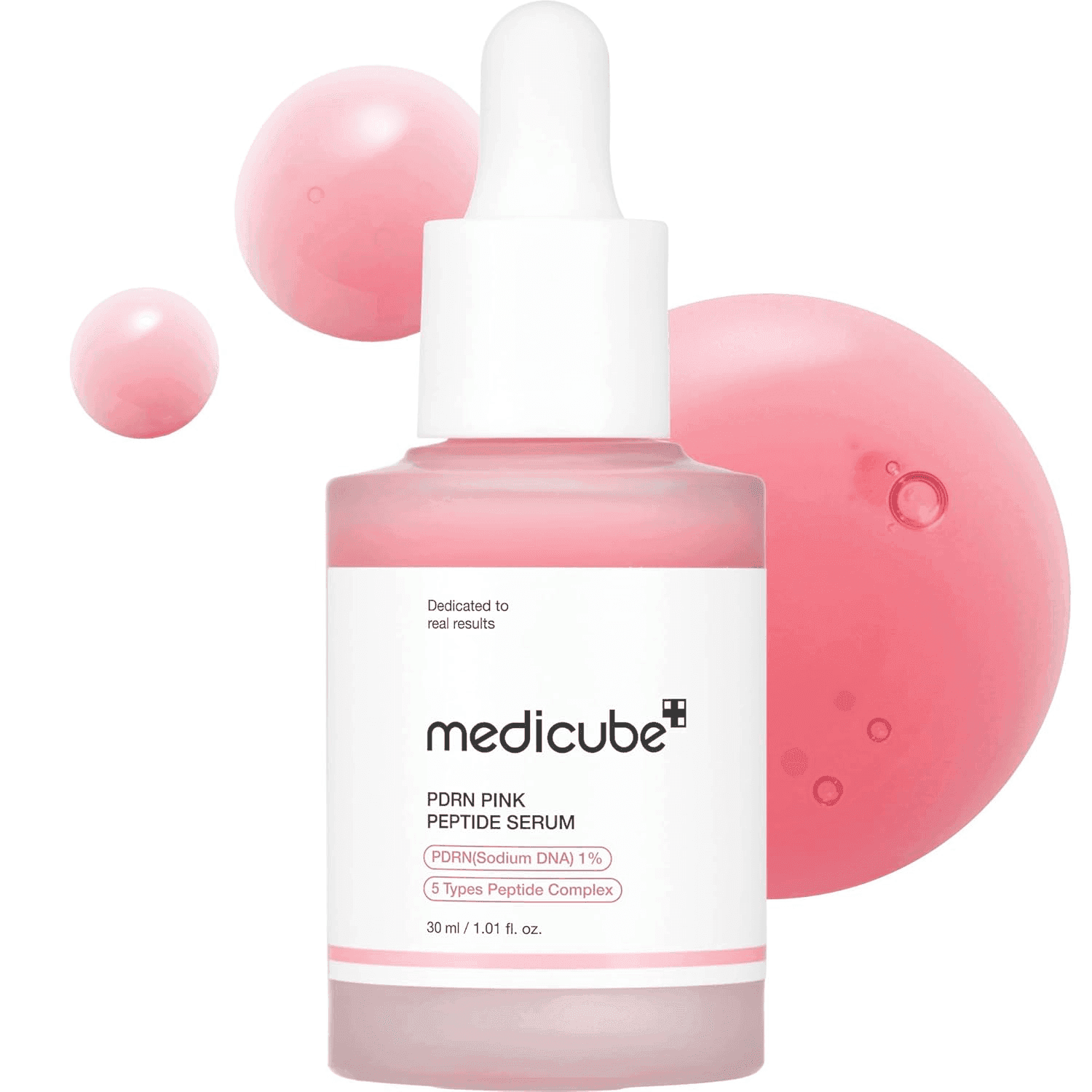
The most-reviewed salmon-DNA PDRN serum on Amazon by a wide margin, pairing salmon DNA with a five-peptide and niacinamide base that does more than the PDRN alone.
Pros
- Confirmed salmon DNA — the exact source class the human PDRN research is built on
- Genuinely multi-active: five peptides, niacinamide and adenosine share the work
- Inexpensive for the ingredient list, and hugely reviewed so quality control is consistent
Cons
- Sodium DNA is 8th of 40, fairly high, but the visible results are as much niacinamide and peptides as PDRN
- Contains fragrance, which reactive skin may not tolerate
- Sold in a near-identical "Rose PDRN" vegan version — check you are buying the salmon SKU
| PDRN source | Salmon DNA |
|---|---|
| Format | Serum |
| Skin type | All / normal |
| Size | 1.01 fl oz (30 ml) |
| Key actives | PDRN, 5 peptides, niacinamide, adenosine |
| Fragrance | Yes |
Why we picked it: Among salmon-DNA serums it is the safest first recommendation: the source is the researched one, the supporting formula is legitimately good, the price is low, and nearly twenty thousand ratings mean you know what you are getting. It wins on the balance of evidence, formula and value rather than any single hero claim.
What it's like to use: Reviewers consistently describe a lightweight, fast-absorbing serum that layers cleanly under moisturiser and gives a short-term plumping glow. It is a maintenance product, not a dramatic corrector, which is the honest ceiling for any topical PDRN.
Best for: Someone buying their first salmon-DNA serum who wants a proven, well-rounded formula without overthinking it.
Who should skip it: You react to fragrance, or you specifically want a bare PDRN-and-hydration formula with nothing else in it.
The catch: Like every topical PDRN, the molecule is large and penetration is limited — do not expect it to reproduce what an in-clinic injection does.
On the label: DNA listed 8 of 40. Full ingredient analysis →
Tree of Life PDRN Serum with Salmon DNA & CICA
A drugstore-priced salmon-DNA serum with an enormous review base, pairing salmon DNA with soothing CICA for the lowest sensible entry point into the researched material.
Pros
- Salmon DNA at the lowest realistic price, so trying the researched source costs very little
- The largest verified review base of any serum here — you know exactly what arrives
- CICA (centella) in the base makes it a calm, low-drama daily layer
Cons
- Marketed partly as a hydrating face oil, so PDRN is a supporting note rather than the headline active
- Sodium DNA is 27th of 35, after ethylhexylglycerin, and the listing's "PDRN 100" is never defined
- The lowest average rating in this guide, reflecting a mass-market formula rather than a concentrate
| PDRN source | Salmon DNA |
|---|---|
| Format | Serum |
| Skin type | All / sensitive |
| Size | 1 fl oz (30 ml) |
| Key actives | PDRN, centella (CICA), humectants |
| Fragrance | Fragrance-free |
Why we picked it: If budget is the deciding factor, this delivers a fragrance-free salmon-DNA serum for the least money, so the stakes of experimenting with the researched source are minimal. It is an Amazon-only brand with no brand site, so its formula rests on the Amazon listing alone.
What it's like to use: Buyers describe a light, comfortable serum that hydrates and calms without irritation; results are subtle and gradual rather than corrective.
Best for: Cost-conscious buyers who want the salmon source without paying a K-beauty premium.
Who should skip it: You want a high-concentration formula or a prominent PDRN position on the ingredient list.
The catch: At this price the PDRN is present but modest; treat it as gentle daily skincare with the researched source, not a potent treatment.
On the label: DNA listed 27 of 35. Full ingredient analysis →
Anua PDRN Hyaluronic Acid Capsule 100 Serum (Salmon DNA)
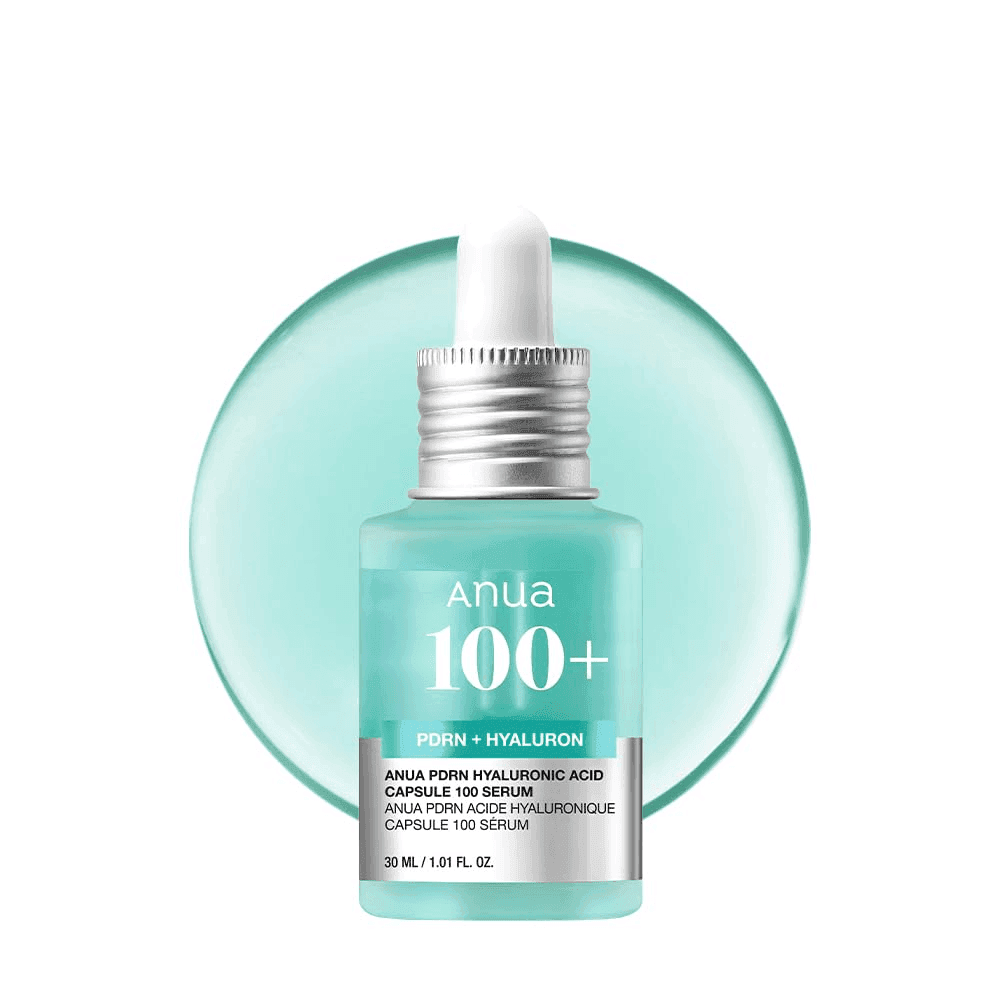
A hydration-first salmon-DNA serum from a popular K-beauty brand, built around a multi-weight hyaluronic base that suits parched, tight skin.
Pros
- Salmon-derived PDRN carried in a strong multi-weight hyaluronic base
- Comfortable, cushioning feel that dry and dehydrated skin tends to prefer
- Well-reviewed brand with a reliable formulation record
Cons
- Sodium DNA sits well down the ingredient list, so this is a hydration serum first and a PDRN serum second
- Pricier per millilitre than the medicube and Tree of Life picks
- Not the pick if your goal is firming rather than moisture
| PDRN source | Salmon DNA |
|---|---|
| Format | Serum |
| Skin type | Dry / dehydrated |
| Size | 1.01 fl oz (30 ml) |
| Key actives | PDRN, hyaluronic acid complex |
| Fragrance | Fragrance-free |
Why we picked it: When the primary problem is tightness and dehydration, its hyaluronic-led formula is the most comfortable of the salmon-DNA options, and the brand has a strong reliability record among K-beauty buyers.
What it's like to use: Buyers describe lasting hydration and a plumped look; it works best sandwiched between a hydrating toner and a cream. Read our full Anua PDRN serum review at /blog/anua-pdrn-serum-review/.
Best for: Dry, dehydrated or winter skin that wants water and the salmon-DNA source in one step.
Who should skip it: Your skin is oily or you specifically want a firming-focused treatment.
The catch: Judge it on the water side of the equation, not the regeneration side — the salmon PDRN is a supporting act here.
On the label: DNA listed 21 of 34. Full ingredient analysis →
FRANKLY Salmon PDRN Bounce Ball Serum (99% Salmon DNA)
A light, fragrance-free salmon-DNA serum that leads with a "99% salmon DNA" claim, which describes raw-material purity, not how much PDRN is in the bottle.
Pros
- Short 29-ingredient, fragrance-free formula with niacinamide and salmon egg extract
- Non-sticky texture popular for post-microneedling recovery
- Well-rated with a solid review base for a concentration-focused product
Cons
- "99% pure" is raw-material purity, not a dose; Sodium DNA is 17th of 29, after citric acid and adenosine
- Minimalist formula gives dry skin less hydration support than the hyaluronic-led picks
- Concentration claims outpace what a leave-on topical can realistically deliver into skin
| PDRN source | Salmon DNA |
|---|---|
| Format | Serum |
| Skin type | Normal / compromised barrier |
| Size | 1.01 fl oz (30 ml) |
| Key actives | Salmon PDRN, niacinamide, salmon egg extract |
| Fragrance | Fragrance-free |
Why we picked it: For readers who want a short, light, fragrance-free salmon-DNA serum for calm or recovering skin, this is a simple pick with a credible review base. It does not win on PDRN strength: FRANKLY gives no concentration, and medicube and TOSOWOONG list their DNA higher.
What it's like to use: Reviewers use it as a calming recovery serum after microneedling or on irritated skin, reporting reduced redness and a smoother feel; the light texture absorbs quickly.
Best for: Buyers who want a light, fragrance-free salmon-DNA serum, or a post-procedure recovery layer.
Who should skip it: You want a cushioning hydrator, or you distrust headline percentage claims and prefer a fuller supporting formula.
The catch: The "99%" says nothing about the dose, and with the DNA mid-list and no disclosed figure, judge it as a light serum rather than a PDRN concentrate.
On the label: DNA listed 17 of 29. Full ingredient analysis →
TOSOWOONG Pink Peptide 12 PDRN Serum (Salmon DNA)
A salmon-DNA serum with a disclosed 1% (10,320 ppm) salmon PDRN, 8th of 58, alongside niacinamide; the twelve peptides in the name are disclosed in parts per billion.
Pros
- One of the few to disclose an actual salmon PDRN figure (1% / 10,320 ppm) rather than a vague claim
- Sodium DNA is listed 8th, right after niacinamide, and the formula is fragrance-free
- Strong review base and glass-skin finish for the price
Cons
- The twelve peptides are disclosed at 0.05 to 19 parts per billion, so the "Peptide 12" name is not a real peptide dose
- Niacinamide sits just above the DNA, so you cannot attribute any effect to the salmon PDRN specifically
- Pink tint and glow are cosmetic, not a marker of potency
| PDRN source | Salmon DNA |
|---|---|
| Format | Serum |
| Skin type | Normal / combination |
| Size | 1.11 fl oz (33 ml) |
| Key actives | PDRN 1%, niacinamide, 12 peptides (trace) |
| Fragrance | Fragrance-free |
Why we picked it: It prints its PDRN dose on the label, 10,320 ppm (about 1%), the highest disclosed DNA figure we have verified, which is exactly the transparency this category lacks. It wins on that PDRN disclosure, not on its peptides, which are present only in trace amounts.
What it's like to use: Reviewers report a smooth, firmer-looking finish and even tone over weeks of use; the texture is light and layers well under sunscreen.
Best for: Buyers who want the highest disclosed salmon PDRN dose, paired with niacinamide, in one bottle.
Who should skip it: You want a single-active PDRN serum you can evaluate on the PDRN alone, or you avoid busy formulas.
The catch: The disclosed 1% is honest but still modest for a topical, and the peptides are too trace to credit; niacinamide likely drives much of the visible effect.
On the label: DNA listed 8 of 58 (label states 10,320ppm). Full ingredient analysis →
REJURAN Turnover Ampoule (c-PDRN, Salmon DNA)
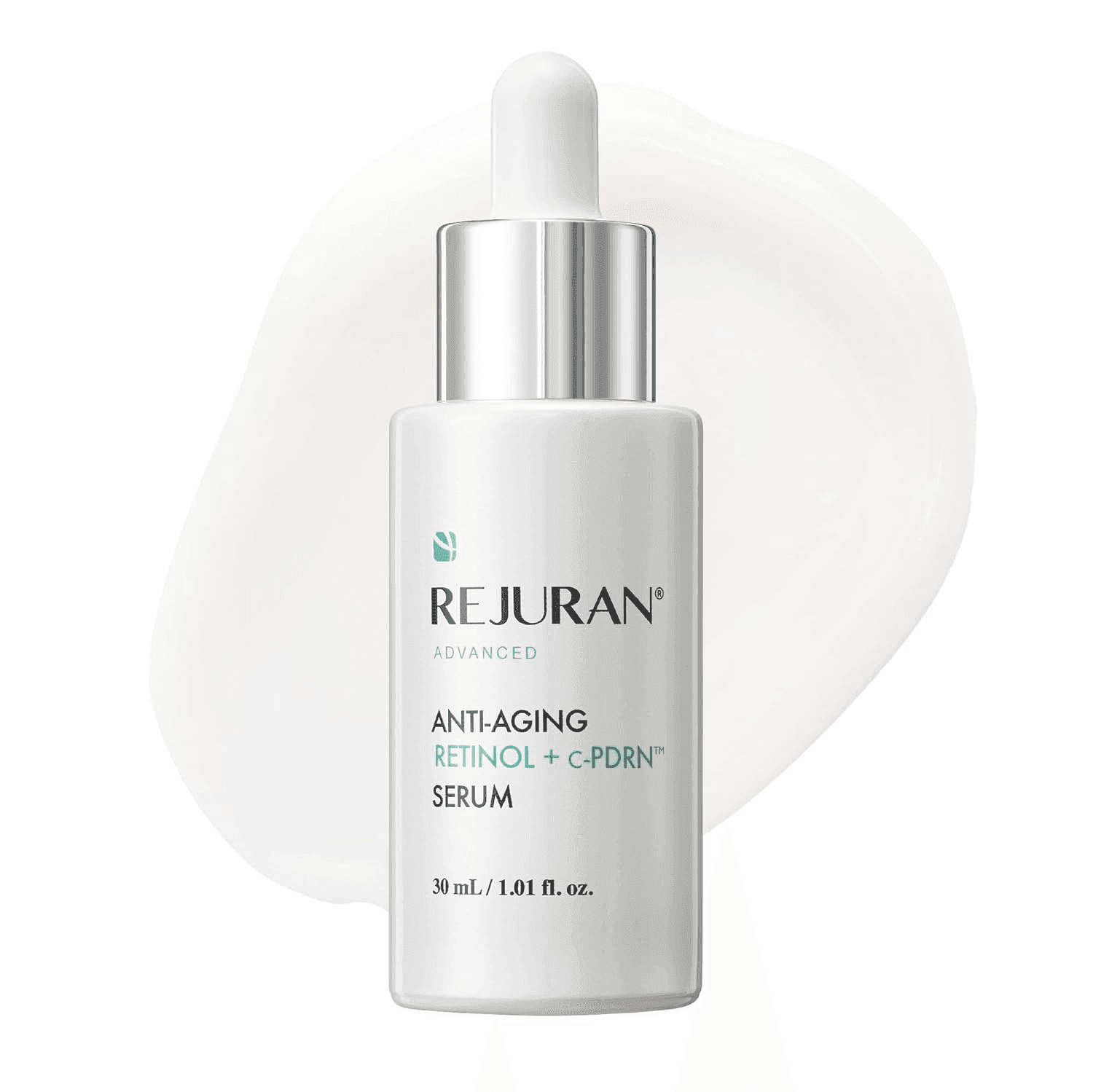
The at-home salmon-DNA ampoule from the brand behind the well-known Rejuran clinic injectables — the prestige pick, with the caveats that come with it.
Pros
- From the most recognised clinical salmon-PDRN brand, in a concentrated ampoule format
- Positioned as a maintenance product for texture and firmness between clinic visits
- Higher perceived quality and packaging, and a large review base for a premium product
Cons
- Substantially more expensive per millilitre than every other salmon pick here
- A topical ampoule is not a diluted injectable — the delivery route is completely different
- The brand's flagship aesthetic trials have been retracted, so the clinic reputation outruns the published evidence
| PDRN source | Salmon DNA (c-PDRN) |
|---|---|
| Format | Ampoule |
| Skin type | Normal / mature |
| Size | 1.01 fl oz (30 ml) |
| Key actives | c-PDRN complex |
| Fragrance | None listed |
Why we picked it: It earns a place for buyers who want the Rejuran name and a concentrated salmon-DNA format for maintenance, and are comfortable paying a premium for brand pedigree rather than proven topical superiority.
What it's like to use: Reviewers report a nice glow, refined texture and a premium feel; the experience is closer to a luxury serum than a clinical event. Our take on the brand is at /blog/decoding-rejuran-is-this-pdrn-skin-booster-worth-the-hype/.
Best for: Existing Rejuran clinic patients maintaining between sessions, or buyers who want the recognised salmon-PDRN brand.
Who should skip it: You are price-sensitive or expect a topical to reproduce the in-clinic injection result.
The catch: You are paying largely for the brand: the topical has no published evidence of matching the injectable, and the injectable evidence itself is thinner than the marketing implies.
On the label: DNA listed 13 of 25. Full ingredient analysis →
How we researched this
- We started from the salmon and trout-DNA PDRN serums with the largest verified review bases on Amazon, and deliberately excluded every plant, vegan and "rose/ginseng/red bean" PDRN product so this guide only covers the researched marine source.
- We confirmed the DNA source on each product from its listing and ingredient information, and kept only serums where salmon or marine DNA is genuinely present rather than mentioned in passing.
- Because almost no brand discloses a real PDRN percentage, we used ingredient-list order as the honest proxy for how prominent the salmon DNA actually is, and treated "99%" purity claims and front-of-box ppm figures as unregulated marketing rather than verified doses, unless the dose is printed on the label itself.
- We assessed the surrounding formula — hydration, peptides, soothing agents, fragrance — because with topical PDRN the rest of the formula usually drives the visible result.
- We assigned each product a single use case so the guide helps you choose, rather than ranking near-identical serums for no reason. We did not physically test the products and do not claim to have.
How to choose a PDRN product
Why this guide is salmon-DNA only
The clinical literature on PDRN was built almost entirely on DNA from salmon and trout. Plant-derived "PDRN" (ginseng, rice, red bean, so-called rose PDRN) is a newer marketing category with very little independent human data — a different molecule wearing the same acronym. This guide covers only the marine source so you are choosing the material the research studied. If you are open to vegan or fish-free options and willing to accept weaker evidence, use our general guide at /best/best-pdrn-serum/ instead.
Ingredient position matters more than the ppm on the front
Figures like "100,000 ppm" or "99% salmon DNA" are unregulated marketing numbers. Regulators do not require brands to disclose a real percentage, so the most honest signal is where sodium DNA (salmon DNA) sits in the ingredient list. High up means it is a genuine feature; near the bottom means it is present at under one percent and the rest of the formula is doing the work. A disclosed figure like TOSOWOONG's 1% is more useful than an undisclosed "99%".
Match the format to your skin, not the hype
A hyaluronic-led salmon serum suits dry skin; a stripped-back concentrate suits a compromised barrier or post-procedure recovery; a peptide-stacked formula suits firmness and tone. The best salmon PDRN serum for you is the one whose base formula fits your skin type, because that base is what you will actually feel. Salmon sourcing decides the class; the supporting formula decides the daily experience.
Set realistic expectations for a topical
Salmon PDRN is a large molecule and topical penetration is limited. Expect hydration, comfort and a short-term glow from any of these serums, not the firming or scar remodelling associated with in-clinic PDRN injections. Choosing the researched salmon source improves the odds that the active is the studied material, but a leave-on serum is still maintenance, not a substitute for a clinic booster.
Frequently asked questions
Why salmon PDRN specifically, and not a vegan or plant version?
Almost all of the human research behind PDRN used DNA from salmon and trout, so salmon-derived PDRN is the material with the stronger evidence base. Plant-derived versions (ginseng, rice, red bean, rose PDRN) are reasonable if you avoid animal-derived ingredients, but they have little independent human efficacy data and are effectively a different molecule. This guide is salmon-only on purpose; if you want the vegan options weighed up, see our general PDRN serum guide at /best/best-pdrn-serum/.
Is salmon-DNA PDRN safe if I have a fish allergy?
The main fish allergen is a muscle protein, while PDRN is purified DNA, so the theoretical risk is low — but the aesthetic studies specifically exclude fish-allergic people, so that group has the least safety data. If you have a fish or shellfish allergy, a plant-derived option or a patch test and a conversation with your doctor is the cautious route. This is general information, not medical advice.
Does a higher ppm or "99% salmon DNA" mean a better serum?
Not reliably. Those numbers are unregulated and often describe the raw material rather than the finished active concentration, and no ppm figure overcomes the fact that topical PDRN penetrates skin poorly. A disclosed percentage placed sensibly in the ingredient list (like a stated 1%) tells you more than a headline "99%". Judge these serums on ingredient-list position and the supporting formula, not the biggest number on the box.
Where should a salmon PDRN serum go in my routine?
After cleansing and any watery toner, on slightly damp skin, before your moisturiser and (in the morning) sunscreen. Layering a lightweight salmon PDRN serum on damp skin and sealing it with a cream is the arrangement most likely to keep the humectants working. Give any of them at least four to eight weeks before judging results.
How much should I spend on a salmon PDRN serum?
You do not need to spend a lot. Our best-overall and best-budget picks are among the cheapest here, and price mostly tracks brand and format rather than salmon-PDRN quality. A premium clinic-brand ampoule buys pedigree and packaging, not proven topical superiority, so start affordable unless you specifically want a particular brand.
Sources
- Squadrito F, et al. Pharmacological Aspects and Therapeutic Applications of Polydeoxyribonucleotides. Front Pharmacol, 2017. Link
- Galeano M, et al. Polydeoxyribonucleotide: A Promising Biological Platform. Pharmaceuticals, 2021. Link
- Park H, et al. Polynucleotide and Polydeoxyribonucleotide in Skin: penetration and formulation review. Pharmaceutics, 2025. Link
- U.S. FDA. Cosmetics Labeling Guide (ingredient declaration and concentration disclosure). Link
Why you can trust this guide
- Who wrote it
- PDRN Guide Editorial Team — Research & Editorial. We research PDRN products against the published literature and disclosed formulations. Read our editorial policy.
- How we researched it
- We compared products on disclosed ingredients, verified specifications, format, and aggregated customer-review data from Amazon. We did not physically test these products and do not claim to have.
- Updated
- Affiliate disclosure
- Some links are Amazon affiliate links; we may earn a commission at no extra cost to you. Products are chosen on formulation and evidence, never on commission rate.
- Not medical advice
- This is informational only. For your own skin or any injectable treatment, see a qualified healthcare provider.